Building strong and lasting customer relationships is one of the biggest priorities for modern businesses. Salesforce Service Cloud Implementation Services provide organizations with advanced tools to deliver consistent, personalized, and efficient support at every touchpoint. By combining automation, real-time analytics, and customer-centric workflows, Service Cloud allows companies to create meaningful experiences that strengthen trust and loyalty over time.
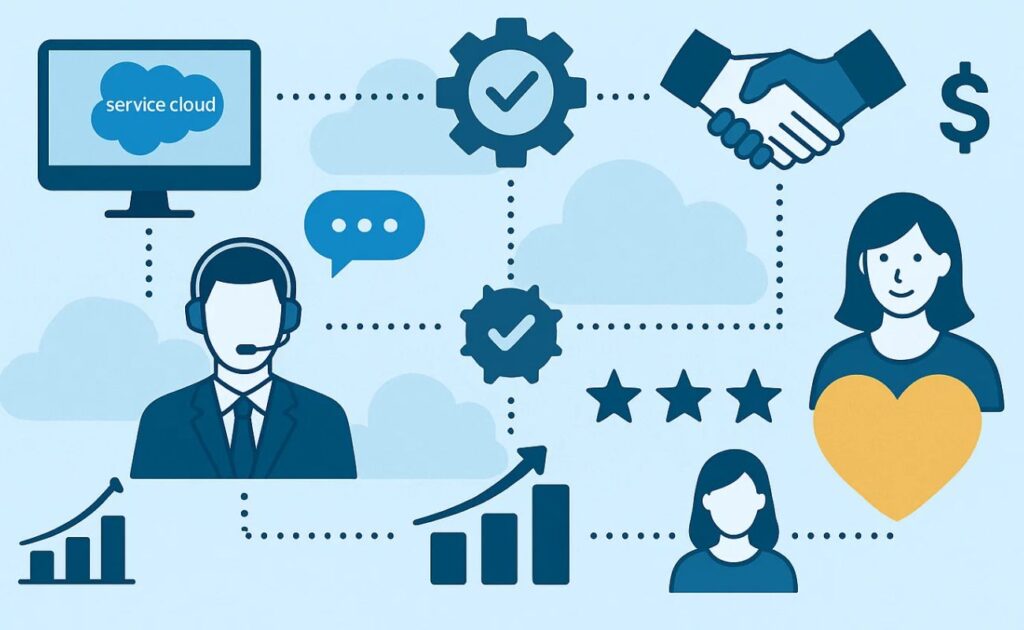
Why Customer Loyalty Matters More Than Ever
Customer loyalty is more than repeat purchases. It means building a trusted relationship where customers choose your brand over competitors, even when options are available. Loyal customers spend more, recommend products to others, and contribute significantly to long-term revenue growth.
According to research from Bain and Company, increasing customer retention by 5 percent can lead to a profit increase of 25 to 95 percent. This shows why service excellence and loyalty are not just goals but business essentials.
Service Cloud supports this mission by ensuring every customer interaction, whether through phone, chat, email, or self-service, is handled with speed, context, and care.
How Salesforce Service Cloud Implementation Services Drive Loyalty
Implementing Service Cloud is not just about adding new software. It requires aligning technology with customer service strategy. Below are the primary ways these services help organizations nurture loyalty:
Unified Customer View
Service Cloud centralizes customer data from different channels into a single dashboard. Agents have access to complete profiles, purchase history, preferences, and past interactions. This allows them to resolve issues quickly and personalize every response.
A unified view ensures agents provide relevant, accurate, and personalized service, which makes customers feel valued and appreciated.
Faster Response Times
With automation, case routing, and AI-powered chatbots, Service Cloud drastically reduces response times. Customers no longer need to wait for hours to get answers, which directly improves satisfaction and retention.
Personalized Interactions
Service Cloud uses predictive intelligence and AI to suggest solutions, product recommendations, and next-best actions. This personalization ensures that customers feel understood and supported. Personalized service is one of the strongest drivers of long-term loyalty.
Self-Service Options
Many customers prefer solving problems on their own. Service Cloud enables knowledge bases, customer portals, and communities where answers are available instantly. This reduces the workload for agents and gives customers the freedom to find solutions 24/7.
Omnichannel Experience
Customers today expect consistent support across multiple platforms. Service Cloud integrates phone, email, chat, social media, and messaging apps into a single system. Businesses can meet customers where they are without losing continuity.
Scalable Service Operations
As a business grows, so do the demands on customer support. Service Cloud scales effortlessly, allowing companies to expand service capacity without compromising quality. This ensures loyalty remains intact even during rapid growth phases.
Proactive Customer Engagement
With real-time analytics and predictive tools, businesses can anticipate customer needs before issues arise. Proactive support, such as sending alerts, reminders, or updates, builds confidence and prevents dissatisfaction.
Real-World Impact of Service Cloud
Organizations across industries have seen measurable improvements after implementing Salesforce Service Cloud.
A U.S. telecom company reported a 30 percent reduction in case resolution times by consolidating customer service into Service Cloud.
A healthcare provider improved patient satisfaction scores by 20 percent within six months by using Service Cloud to deliver faster, more accurate support.
An educational institution reduced support costs by nearly 25 percent after deploying self-service portals powered by Service Cloud.
These examples show that Service Cloud does not just optimize operations; it directly impacts customer experiences and retention.
Steps to Maximize the Value of Service Cloud
Successful Salesforce Service Cloud Implementation Services require careful planning. Businesses can follow these steps to maximize results:
Assess Service Gaps – Review current customer service challenges such as delays, inconsistent responses, or lack of personalization.
Define Clear Goals – Establish measurable outcomes like improving Net Promoter Score (NPS), reducing service costs, or speeding up response times.
Customize Features – Use tools such as automation, AI, and case routing in ways that match your specific business model.
Integrate with Existing Systems – Connect Service Cloud with CRM, ERP, or communication tools to unify data across the organization.
Train Service Teams – Provide training to ensure agents know how to use the platform effectively.
Track and Optimize – Leverage built-in analytics to monitor progress and continuously refine workflows.
How xTag Services Supports Businesses
At xTag Services, we help organizations in the USA implement Salesforce Service Cloud with precision. Our team focuses on customizing workflows, integrating systems, and ensuring businesses gain maximum value from the platform. By aligning technology with service strategies, we help companies create meaningful customer experiences that drive loyalty.
FAQs About Salesforce Service Cloud Implementation Services
Q1: What are Salesforce Service Cloud Implementation Services?
They involve the setup, customization, and integration of Salesforce Service Cloud to improve customer service efficiency and satisfaction.
Q2: How does Service Cloud build customer loyalty?
It improves loyalty by providing fast responses, personalized interactions, and consistent support across all channels, leading to stronger relationships.
Q3: Can Service Cloud integrate with other business applications?
Yes. Service Cloud integrates with CRMs, ERPs, and third-party apps, ensuring a connected data ecosystem across the organization.
Q4: Is Service Cloud suitable for small businesses?
Yes. Service Cloud is flexible and scalable, making it useful for small startups as well as large enterprises.
Q5: What industries benefit from Service Cloud?
Retail, healthcare, financial services, telecom, and education are among the industries that benefit most from Service Cloud solutions.
Final Thoughts
Customer loyalty is built on trust, personalization, and consistent service experiences. Salesforce Service Cloud Implementation Services provide the tools businesses need to deliver on these expectations. With features like a unified customer view, automation, omnichannel support, and proactive engagement, Service Cloud empowers organizations to keep customers satisfied and loyal for years to come.