
Have you ever wondered what’s happening behind your walls or inside your switchboard? Could there be electrical faults silently building up, waiting to cause serious problems? What if you could spot these hidden dangers before they turn into expensive repairs or worse, a fire?
Electrical thermal imaging offers exactly this capability. It’s a non-invasive inspection method that reveals what the naked eye simply cannot see. By detecting heat patterns in electrical systems, thermographers can identify potential hazards long before they become critical. This technology has revolutionised how we approach electrical safety in both homes and businesses across Australia.
In this complete guide, you’ll discover everything you need to know about electrical thermal imaging inspections. We’ll explore how the technology works, what faults it can detect, and why it’s become an essential tool for property owners and facility managers. Whether you’re considering your first thermal inspection or want to understand the process better, this guide has you covered. Let’s get stuck into it.
Understanding Electrical Thermal Imaging
The Science Behind Infrared Electrical Thermal Imaging
Electrical thermal imaging works on a straightforward principle: all objects emit infrared radiation based on their temperature. Thermal cameras capture this invisible radiation and convert it into visible images. Hotter areas appear brighter or in different colours, depending on the camera settings.
The technology is completely safe and non-contact. Inspectors don’t need to touch live equipment or disrupt your power supply. This makes electrical thermal imaging ideal for routine maintenance checks without any operational downtime.
What Can Electrical Thermal Imaging Detect in Systems?
Electrical thermal imaging excels at finding problems that would otherwise remain invisible. Loose connections, overloaded circuits, and failing components all produce distinctive heat signatures. Even minor temperature variations can indicate developing faults.
Key Components Inspected During Electrical Thermal Surveys
During a thorough thermal survey, technicians examine multiple areas of your electrical infrastructure. Switchboards and distribution boards receive particular attention, as they’re common hotspots for problems. All circuit breakers, fuses, and isolation switches get scanned methodically.
Cable terminations and junction boxes are also priority inspection points. These connection points often develop high-resistance joints over time. Motor control centres, transformers, and capacitor banks in commercial settings require careful thermal analysis too.
Benefits of Electrical Thermal Imaging Inspections
Preventing Electrical Fires and Equipment Failure
Electrical fires cause devastating damage to Australian properties each year. Many of these incidents could have been prevented with proper thermal imaging inspections. By identifying overheating components early, you eliminate fire risks before they materialise.
Reducing Downtime and Costly Repairs
Unexpected electrical failures hit businesses hard. Production stops, data gets lost, and customers get frustrated. Planned maintenance based on electrical thermal imaging findings avoids these scenarios entirely.
Electrical thermal imaging also helps prioritise repairs effectively. Not every anomaly requires immediate attention. The detailed reports help you allocate maintenance budgets wisely, addressing the most critical issues first.
Meeting Australian Workplace Health and Safety Requirements
Australian workplaces have legal obligations regarding electrical safety. Electrical thermal imaging inspections demonstrate due diligence in meeting these requirements. They provide documented evidence that you’re actively managing electrical risks.
The Electrical Thermal Imaging Inspection Process
What Happens During an Electrical Thermographic Survey?
A qualified thermographer arrives with specialised equipment and follows a systematic process. They’ll first discuss your electrical system layout and any known concerns. This initial conversation helps target the inspection effectively.
The actual scanning involves methodically examining all accessible electrical components. The thermographer captures thermal images while the system operates under normal load conditions. This is crucial faults often only appear when equipment is actually working.
Equipment Used in Professional Thermal Inspections
Professional thermographers use high-resolution infrared cameras specifically designed for electrical inspections. These aren’t the basic thermal devices available at hardware stores. Industrial-grade cameras provide the sensitivity and accuracy needed for reliable fault detection.
The cameras capture detailed thermal images showing precise temperature measurements. Software then processes these images, highlighting anomalies and calculating temperature differentials. This analysis distinguishes between normal operating temperatures and genuine concerns.
Additional equipment might include digital cameras for reference photos and laser thermometers for spot-checking. Comprehensive reports combine thermal images with standard photographs, showing exactly where problems exist.
How Long Does an Electrical Thermal Inspection Take?
Inspection duration depends entirely on the size and complexity of your electrical installation. A typical residential property might take one to two hours. Commercial premises with extensive electrical infrastructure require considerably longer.
Large industrial facilities could need a full day or multiple visits. The thermographer must scan every accessible component thoroughly. Rushing the process defeats the purpose entirely comprehensive coverage matters more than speed.
You’ll generally receive your report within a few business days. Some providers offer preliminary verbal feedback immediately after the inspection. This gives you early warning of any critical issues requiring urgent attention.
Common Electrical Faults Detected by Thermal Imaging
Loose Connections and High-Resistance Joints
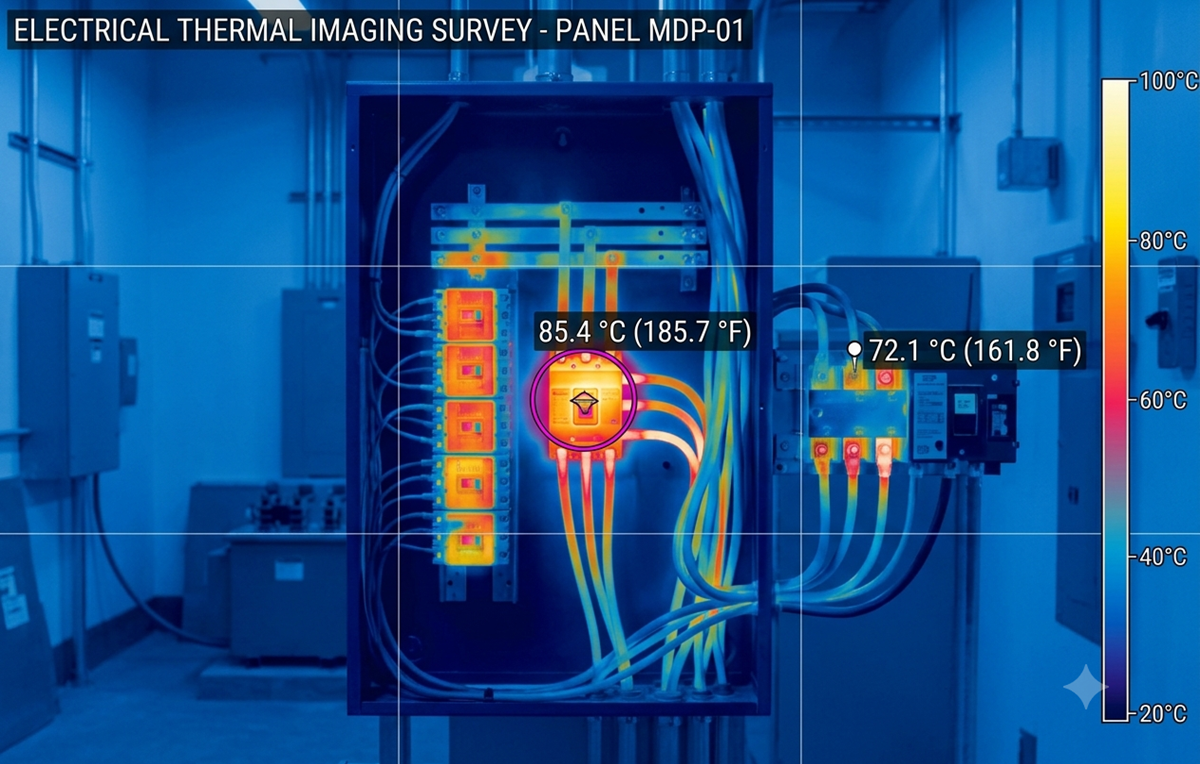
Loose connections top the list of electrical thermal imaging discoveries. When connections loosen, electrical resistance increases. This resistance generates heat sometimes significant heat. Thermal cameras spot these hotspots immediately.
High-resistance joints develop for various reasons. Thermal cycling, vibration, and simple age all contribute. The connection might look perfectly fine visually while running dangerously hot internally.
Overloaded Circuits and Imbalanced Loads
Circuits carrying more current than designed for generate excess heat. Electrical thermal imaging reveals these overloaded circuits clearly. The entire cable run appears warmer than surrounding circuits.
Three-phase systems can develop load imbalances that stress individual phases. One phase running significantly hotter indicates an imbalance requiring correction. Left unchecked, this accelerates wear on cables and equipment.
Choosing a Qualified Electrical Thermal Imaging Service
What Qualifications Should a Thermographer Have?
Look for thermographers with recognised certifications in infrared thermography. Level II certification indicates substantial training and experience. They should also hold appropriate electrical licences for working around live equipment.
Experience matters significantly in electrical thermal imaging. Interpreting thermal patterns requires skill developed over many inspections. Ask about their background and how many similar inspections they’ve completed.
Protecting Your Property with Proactive Electrical Inspections
Electrical thermal imaging represents a smart approach to electrical safety. Rather than waiting for problems to announce themselves through failures or fires, you’re actively seeking them out. This proactive stance protects both property and people.
Taking action on electrical thermal imaging is straightforward. Find a qualified thermographer, schedule your inspection, and implement their recommendations. Your electrical system and everyone who depends on it will be safer for your effort. Don’t wait for a problem to remind you why electrical safety matters. Get your thermal inspection booked today.