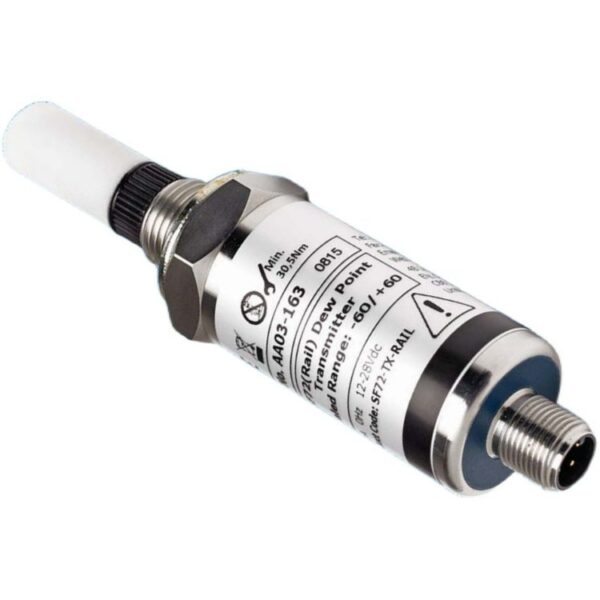
Moisture measurement is an important part of industrial processes where gases and compressed air must maintain specific humidity levels. Excess moisture can affect product quality, equipment performance, and process reliability. A Dewpoint Transmitter measures dew point temperature and converts the measurement into an electrical signal that can be monitored by control and automation systems. Understanding how these instruments operate helps explain their role in maintaining consistent industrial conditions.
What Is a Dewpoint Transmitter?
A Dewpoint Transmitter is an instrument designed to measure the temperature at which water vapor in a gas begins to condense. It uses a moisture-sensitive sensor to detect changes in water vapor concentration and communicates the measured information to monitoring or control equipment.
Unlike a standalone indicator, a transmitter is designed to provide measurement signals that can be integrated into industrial monitoring systems. Its output allows operators to observe moisture conditions and respond when readings move outside specified process limits.
How Does Dewpoint Measurement Work?
Dewpoint measurement is based on the relationship between water vapor and temperature. When a gas is cooled under suitable conditions, it eventually reaches a temperature at which water vapor begins to condense.
A dew point instrument detects this moisture condition through its sensing technology. The resulting measurement can help operators understand the moisture content of compressed air, natural gas, and other industrial gases.
Main Components of a Dewpoint Transmitter
Moisture Sensor
The sensing element detects changes associated with water vapor in the measured gas. Sensor technology and measurement range depend on the instrument design.
Signal Processing Unit
The internal electronics process the sensor response and convert it into a usable measurement signal.
Display and Communication Interface
Depending on the model, a transmitter may include a local display and communication options for connecting with industrial monitoring systems.
Process Connection
The connection allows the instrument to be installed within a suitable sampling arrangement or process measurement point.
Industrial Applications
Dew point monitoring is used in several industries where moisture levels need to be controlled.
Compressed Air Systems
Monitoring helps operators assess air dryness and identify moisture-related changes in compressed air networks.
Pharmaceutical Manufacturing
Controlled moisture conditions can be important in manufacturing environments where process consistency is required.
Petrochemical Industry
Gas moisture measurement supports monitoring activities in processing and gas-handling systems.
Power Generation
Dew point information can contribute to monitoring moisture conditions in relevant plant systems.
Electronics Manufacturing
Certain production processes require controlled environmental conditions to reduce moisture-related concerns.
Features to Consider When Evaluating a Transmitter
When assessing a transmitter, several technical characteristics deserve attention.
- Measurement range and accuracy
- Sensor response time
- Long-term measurement stability
- Output and communication options
- Installation requirements
- Calibration and maintenance needs
The appropriate specifications depend on the gas being measured and the operating conditions of the application.
ShawMeters and Moisture Measurement Technology
ShawMeters provides moisture measurement instruments designed for industrial applications. Its product range includes dew point measurement solutions for monitoring moisture in compressed air and industrial gases.
When reviewing equipment from ShawMeters, users can consider measurement range, sensor technology, installation arrangements, and available communication features. These specifications help determine how an instrument may fit into a particular monitoring system.
Installation and Maintenance Considerations
Correct installation is important for obtaining representative moisture measurements. Sampling arrangements, gas pressure, temperature, flow conditions, and potential contamination should all be considered.
Regular inspection and calibration according to manufacturer recommendations can help maintain measurement reliability. Operators should also follow the relevant installation and maintenance instructions for the specific instrument.
Conclusion
A Dewpoint Transmitter plays an important role in industrial moisture monitoring by measuring dew point temperature and communicating readings to control systems. Its applications include compressed air, industrial gases, pharmaceutical manufacturing, petrochemical processing, and other environments where moisture conditions matter.
Understanding sensor technology, measurement specifications, installation requirements, and calibration procedures helps organizations evaluate dew point monitoring equipment. ShawMeters offers instruments designed for industrial moisture measurement, supporting the monitoring requirements of different applications.