
Table of Contents
The Everest Base Camp Trek is one of the most photographed journeys in the world, but many trekkers return home feeling their photos do not match what they saw with their own eyes.
The reason is not expensive cameras or professional training. It is planning, timing, and knowing how to handle real mountain conditions.
Here, we will explain photography in a simple yet effective way, drawing on our solid experience from trekking in Nepal and shooting in the Everest region over many years.
Every tip below focuses on real problems trekkers face on the trail and shows you how to fix them step by step, so you can return with photos that truly reflect your journey.
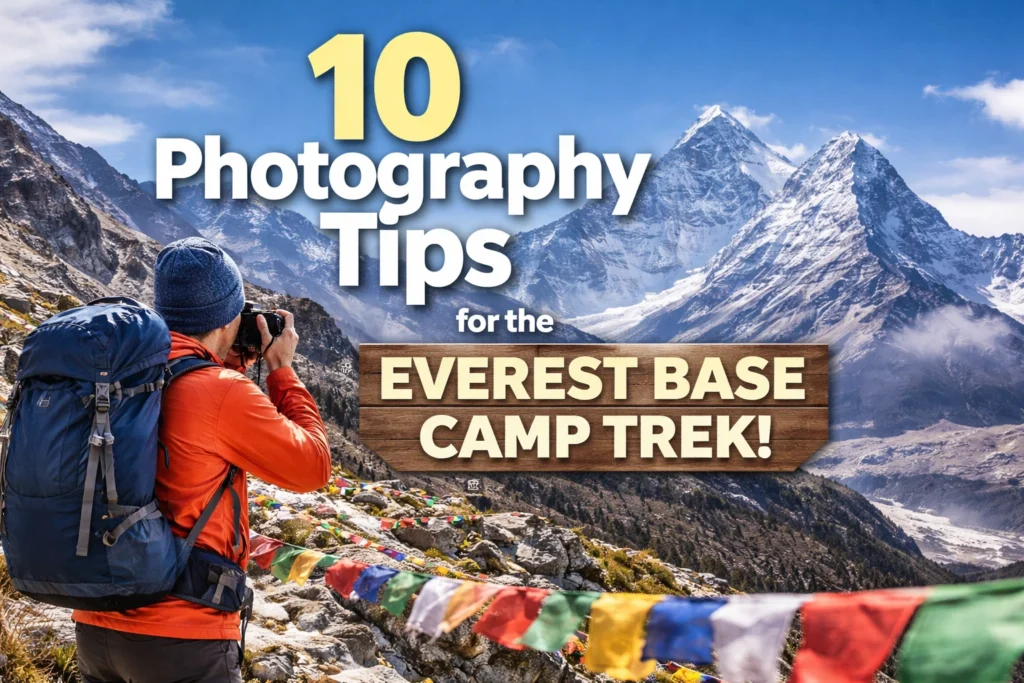
Why Photography on the Everest Base Camp Trek Is Different?
The Everest Base Camp Trek runs through changing landscapes every single day. You start in green forests around Lukla and Phakding, walk through busy Sherpa towns like Namche Bazaar, then slowly move into wide valleys, glaciers, and finally the rocky land near Base Camp itself. Light, weather, altitude, and tiredness all affect photography here.
At high altitude, your body is slower. Cold drains batteries. Bright snow confuses cameras. Wind makes shots shaky.
This blog explains how to deal with these issues using simple habits and smart choices. You do not need to be a professional. You only need to understand how mountains behave.
1. Choose the Right Camera for Trekking, Not the Biggest One
Why heavy gear becomes a problem at altitude
At sea level, carrying extra weight may not feel serious. Above 3,500 meters, every extra gram matters. A heavy camera makes you tired faster, and tired people stop taking photos.
Many trekkers bring large cameras and stop using them after Namche Bazaar. Phones or small mirrorless cameras get used more because they are easier to pull out quickly.
What actually works on the EBC trail
- A smartphone with a good camera works well for most trekkers.
- A lightweight mirrorless camera with one zoom lens is enough.
- Avoid carrying multiple lenses unless photography is your main goal.
Your camera should fit in your jacket pocket or daypack top. If it is easy to reach, you will use it more.
2. Understand Mountain Light Before Pressing the Button
Why does light change fast in the Himalayas?
In the Everest region, clouds move quickly. Sunlight can change within minutes. Valleys stay dark longer, while peaks get light early in the morning and late in the afternoon.
Midday light is harsh and flat. Snow and ice reflect light and confuse automatic camera settings.
Simple rules to follow
- Take landscape photos early morning or late afternoon.
- Avoid shooting directly into bright snow at noon.
- Use your hand or hat to block extra light if needed.
If your photo looks too bright, lower the brightness or exposure slightly. This helps keep detail in snow and clouds.
3. Wake Up Early for the Best Mountain Photos
Why mornings matter more than any camera setting
Early morning is quiet. Wind is low. Light is soft. Peaks glow while villages are still asleep. This is when Everest, Lhotse, Ama Dablam, and Nuptse look their best.
Most trekkers sleep in and miss this time.
How to make morning photography easy
- Prepare your camera the night before.
- Sleep in warm clothes so you can step outside quickly.
- Shoot for 10 to 15 minutes and then go back inside if it is cold.
Short effort gives long-lasting results.
4. Keep Batteries Warm and Charged
Why do batteries die faster in cold weather?
Cold drains batteries very quickly. Even fully charged batteries may show empty after a few minutes outside.
Charging options are limited and expensive in the Everest region.
Practical battery care on the trail
- Carry spare batteries in your inner jacket pocket.
- Keep power banks close to your body at night.
- Turn off Wi-Fi and Bluetooth when not needed.
If a battery dies, warm it inside your jacket. It may work again.
5. Show Scale to Make Mountains Look Massive
Why mountains look smaller in photos
The human eye sees depth better than cameras. Without reference, even Everest can look flat in photos.
How to add scale easily
- Include a person on the trail.
- Show yaks, stone walls, or lodges in the frame.
- Use winding paths or prayer flags leading into the mountains.
This helps viewers understand how big the landscape really is.
6. Photograph People and Culture, Not Only Mountains
Why human stories matter on the EBC Trek
The Everest region is home to Sherpa culture, monasteries, prayer wheels, mani stones, and daily mountain life. These moments tell a deeper story than peaks alone.
Respectful ways to photograph locals
- Always ask before taking close-up portraits.
- Smile and show the photo if possible.
- Avoid photographing inside monasteries unless allowed.
Photos of people cooking, spinning prayer wheels, or walking the trail add emotion to your travel story.
7. Handle Snow, Ice, and Bright Scenes Correctly
Why snow fools cameras
Cameras try to make everything gray. Snow appears darker than it really is, and skies lose detail.
Simple fixes anyone can use
- Increase brightness slightly when shooting snow.
- Tap on the brightest area if using a phone camera.
- Avoid zooming too much in bright light.
Check your screen after each shot. Small adjustments make a big difference.
8. Keep Your Camera Safe from Dust and Weather
Common weather problems on the trail
The Everest Base Camp Trek has dust, wind, snow, and sudden rain. Cameras can get damaged easily if left unprotected.
Easy protection methods
- Use zip-lock bags or rain covers.
- Clean lenses with a soft cloth only.
- Do not change lenses in windy areas.
A working camera on day twelve matters more than fancy shots on day two.
9. Slow Down and Take Fewer, Better Photos
Why rushing ruins photography at altitude
When breathing is hard, thinking becomes slower. Rushing causes blurry photos and missed moments.
A better approach you can follow:
- Stop walking before taking photos.
- Take two or three shots, not twenty.
- Look at the scene before shooting.
Quality comes from patience, not speed.
10. Back Up Photos Whenever Possible
Why losing photos is common on long treks
Phones fall. Memory cards fail. Moisture damages electronics. Many trekkers lose photos near the end of the trek.
Simple backup habits
- Carry a small second memory card.
- Back up photos to a phone or storage device.
- Upload to cloud storage when Wi-Fi is available.
Photos are memories. Protect them.
Helpful Photography Settings for the Everest Base Camp Trek
Do these basic settings:
- Landscape photos – wide angle, low ISO
- Portraits – natural light, no flash
- Snow scenes – slightly higher brightness
- Sunrise and sunset – steady hands or support
Do not overthink settings. Focus on light and timing first.
Best Photography Spots on the Everest Base Camp Trek
Key locations worth slowing down for
- Namche Bazaar viewpoints
- Tengboche Monastery at sunrise
- Dingboche valley
- Lobuche glacier area
- Everest Base Camp itself
- Kala Patthar early morning
These places offer clear views and strong visual stories.
FAQs About Photography on the Everest Base Camp Trek
1. Is a phone camera enough for the Everest Base Camp Trek photography?
Yes. Modern smartphones capture excellent photos in daylight. With good timing and steady hands, phone photos can look very professional.
2. Do I need a tripod on the Everest Base Camp Trek?
A tripod is useful for sunrise, sunset, and night shots, but not necessary for everyone. A small flexible tripod works best if you choose to carry one.
3. Can cold weather damage my camera?
Cold does not damage cameras permanently, but moisture and sudden temperature changes can. Always keep your camera dry and warm when possible.
4. What is the best time of year for photography on the EBC Trek?
Spring, from March to May, and autumn, from late September to November, offer the clearest skies and best light conditions.
Key Takeaways
- Light gear helps you take more photos.
- Morning light gives the best mountain colors.
- Warm batteries last longer.
- Adding people shows a mountain scale.
- Culture photos tell a complete story.
- Protect your camera from dust and cold.
- Slow down for better results.
- Always back up your photos.
What to Do Next After Reading This!
Photography on the Everest Base Camp Trek is not about perfection. It is about being present and prepared. Use these tips before your trek to plan your gear and habits.
During the trek, focus on light, timing, and simple composition instead of technical settings. After the trek, review your photos and note what worked well so your next adventure is even better.
If you are planning your Everest Base Camp Trek, start practicing these tips on local walks now. The mountains reward patience, and so does photography.
Also Read: 5+ Daily Tour Operator Challenges Solved by AI Itinerary Builder
[…] 10 Photography Tips for the Everest Base Camp Trek!>>> What to Pack for Annapurna Circuit Trek (Full Packing List […]