
The Hidden Problem Most Homeowners Miss
Water leaks are one of those issues that start small but spiral into expensive disasters if ignored. What begins as a minor drip behind a wall or under a sink can quickly turn into structural damage, mold growth, and skyrocketing water bills.
If you’ve ever searched for solutions like professional leak detection San Bernardino, you already know how urgent and stressful this problem can feel. The tricky part? Most leaks aren’t obvious. They stay hidden until the damage is already done.
Many homeowners don’t realize they have a leak until they notice:
- A sudden spike in their water bill
- Damp or discolored walls and ceilings
- Musty odors that won’t go away
- Reduced water pressure
- The sound of running water when everything is turned off
By the time these signs appear, the issue has often been developing for weeks or even months.
Why Early Leak Detection Matters
Ignoring a leak isn’t just inconvenient—it’s costly and potentially dangerous.
The Real Risks of Undetected Leaks
- Structural Damage: Water weakens wood, drywall, and even concrete over time
- Mold Growth: Moist environments create the perfect breeding ground for mold
- Higher Utility Bills: Even a small leak can waste hundreds of gallons daily
- Health Concerns: Mold and mildew can trigger allergies and respiratory issues
The earlier you catch a leak, the easier and cheaper, it is to fix.
How to Identify Water Leaks Early
The good news? You don’t need to be a plumbing expert to spot early warning signs. With a little awareness, you can catch leaks before they escalate.
1. Monitor Your Water Bill
Your monthly water bill is one of the easiest ways to detect a hidden issue.
What to watch for:
- Sudden increases without changes in usage
- Consistently rising costs over time
If your usage hasn’t changed but your bill has, there’s a strong chance you have a leak somewhere.
2. Check Your Water Meter
Your water meter can confirm whether water is flowing when it shouldn’t be.
How to test:
- Turn off all water fixtures in your home
- Check the meter reading
- Wait 30–60 minutes without using water
- Check again
If the reading changes, you likely have a leak.
3. Inspect Common Leak Areas
Some areas in your home are more prone to leaks than others.
Kitchen & Bathroom
- Under sinks
- Around faucets and pipes
- Behind appliances like dishwashers
Laundry Room
- Washing machine hoses
- Drain connections
Basement or Crawl Space
- Exposed pipes
- Water heaters
Outdoors
- Irrigation systems
- Hose bibs
- Underground pipes
4. Look for Visual Clues
Leaks often leave behind subtle visual signs before becoming obvious.
Keep an eye out for:
- Water stains on ceilings or walls
- Peeling paint or bubbling wallpaper
- Warped flooring
- Mold or mildew spots
These signs usually indicate a long-term issue that needs immediate attention.
5. Pay Attention to Sounds and Smells
Sometimes your senses can detect what your eyes can’t.
- Sounds: Dripping, hissing, or running water
- Smells: Persistent musty or damp odors
If something feels “off,” trust your instincts—it’s often an early warning.
Modern Solutions for Leak Detection
Technology has made it easier than ever to identify leaks quickly and accurately.
Smart Leak Detection Devices
These devices monitor water flow and alert you to unusual activity.
Benefits include:
- Real-time alerts via smartphone
- Automatic shut-off features
- Continuous monitoring
Professional Leak Detection Services
When a leak is hidden deep within walls or underground, professionals use advanced tools such as:
- Acoustic listening devices
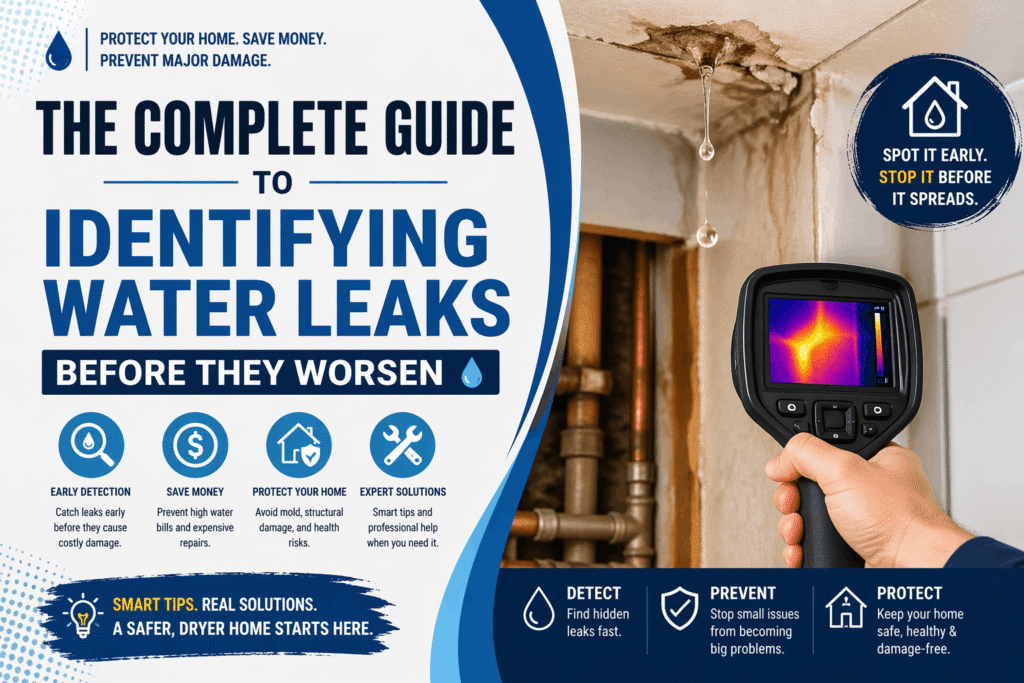
- Thermal imaging cameras
- Moisture sensors
These methods allow experts to locate leaks without tearing apart your property.
Real-World Examples and Data
Understanding the impact of leaks becomes clearer when you look at real data.
- According to the Environmental Protection Agency (EPA), household leaks waste nearly 1 trillion gallons of water annually
- A single dripping faucet can waste over 3,000 gallons per year
- Hidden leaks can increase water bills by 10% or more
Case Example
A homeowner noticed a slight increase in their water bill but ignored it for months. Eventually, they discovered a pipe leaking behind a bathroom wall. The result?
- Extensive mold removal
- Wall reconstruction
- Thousands of dollars in repairs
Had the leak been detected earlier, the repair would have been simple and inexpensive.
Preventative Measures to Avoid Future Leaks
Prevention is always better than repair. Here are steps you can take to protect your home.
Regular Maintenance Checklist
- Inspect pipes and fittings every few months
- Replace old or worn-out hoses
- Check appliance connections
- Monitor water pressure levels
Upgrade Old Plumbing Systems
Older homes are more prone to leaks due to aging pipes.
Consider upgrading to:
- PEX piping
- Copper pipes
- Modern fixtures
Install Leak Detection Systems
Investing in a leak detection system can save you thousands in the long run.
When to Call a Professional
While DIY checks are helpful, some situations require expert intervention.
Call a professional if you notice:
- Persistent water stains
- Unexplained high water bills
- Mold growth
- Low water pressure across the house
- Suspected underground leaks
Professionals can quickly diagnose and resolve issues that might take homeowners weeks to identify.
Take Action Before It’s Too Late
Water leaks don’t fix themselves they only get worse over time. The key is acting early.
By staying alert to warning signs, using modern tools, and scheduling regular inspections, you can protect your home from serious damage.
If you suspect even a small issue, don’t wait. Reach out to Mr. Rooter Plumbing of San Bernardino today for expert leak detection services. Their team uses advanced technology to locate and fix leaks quickly, helping you avoid costly repairs and long-term damage.
Frequently Asked Questions (FAQ)
1. What is the most common cause of hidden water leaks?
The most common causes include worn-out pipes, high water pressure, corrosion, and faulty appliance connections.
2. How can I tell if I have a leak behind a wall?
Signs include discoloration, peeling paint, musty smells, and unexplained moisture. A professional inspection may be needed for confirmation.
3. Are small leaks really a big deal?
Yes. Even small leaks can waste thousands of gallons of water annually and lead to major structural damage over time.
4. How often should I check for leaks?
It’s a good idea to inspect your home every few months and monitor your water bill regularly.
5. Can smart devices really prevent water damage?
Yes. Smart leak detectors can alert you instantly and even shut off your water supply to prevent further damage.
6. When should I hire a professional leak detection service?
If you can’t locate the source of a leak, or if the issue persists despite your efforts, it’s time to call an expert.