
The first few months with a baby can feel strangely repetitive and completely unpredictable at the same time. Feed. Burp. Sleep. Repeat. Then suddenly you’re asking yourself, Wait… which side did I nurse from? How long ago was the last feed?
You’re not alone.
According to the World Health Organization (WHO), exclusive breastfeeding is recommended for the first 6 months of life because of its role in healthy growth and development. But keeping track of feeding routines in real life can feel harder than people expect. That’s one reason more families in India are using a baby feeding tracker App with a nursing timer to simplify feeding and reduce daily stress.
What Is a Baby Feeding Tracker App with Nursing Timer?
A baby feeding tracker app helps parents record feeding sessions in one place. A nursing timer adds another layer—it tracks feeding duration automatically.
Instead of relying on memory, parents can quickly log:
- Breastfeeding sessions
- Left and right nursing sides
- Feeding duration
- Bottle feeds
- Pumping sessions
- Feeding intervals
- Sleep and feeding trends
Think of it like a fitness tracker—but for feeding routines.
You still do the parenting. The app remembers the details.
Why Are Modern Moms Moving Away from Manual Tracking?
Years ago, parents used notebooks.
Then phone notes.
Then screenshots.
Most people eventually realize something:
Manual tracking sounds simple until you’re sleep-deprived.
You forget times.
You lose notes.
You accidentally create more work.
Apps became popular because they reduce friction.
One tap feels easier than searching for paper at 3 AM.
The Real Problem Nobody Warns You About
People talk a lot about diapers.
Not enough about decision fatigue.
New moms make hundreds of tiny decisions every day.
Questions like:
- Is baby feeding enough?
- Was that cluster feeding?
- Should I wake the baby?
- Did I pump already?
Small decisions add up.
Tracking doesn’t remove parenting challenges.
But it removes unnecessary guessing.
Why Smart Nursing Timers Make Such a Big Difference
Timing feeds manually sounds easy.
Until life happens.
You start feeding.
Someone rings the doorbell.
Baby falls asleep.
You forgot to note the time.
A nursing timer automatically records sessions.
That tiny convenience becomes surprisingly helpful.
What Does a Smart Nursing Timer Actually Track?
| Feature | Why Parents Use It |
|---|---|
| Feed duration | Understand feeding habits |
| Side tracking | Alternate nursing comfortably |
| Feed intervals | Identify routine patterns |
| Feed history | Useful during doctor visits |
| Pump logging | Keep milk records organized |
This information isn’t meant to create pressure.
It’s there to create clarity.
1. It Reduces Mental Load
Here’s something many parents quietly admit.
The hardest part isn’t feeding.
It’s remembering.
When feeding records live in your brain, everything feels heavier.
Tracking creates space.
You stop replaying the day in your head.
You check the app and move on.
Example
Without tracking:
“I think baby fed around 1 PM?”
With tracking:
“Last feed ended at 1:12 PM.”
Tiny difference.
Big relief.
2. It Helps Breastfeeding Feel Less Overwhelming
Breastfeeding is natural.
That doesn’t mean it always feels easy.
One thing that often surprises moms?
How repetitive feeding becomes.
Especially early on.
A nursing timer helps answer:
- Which side started last?
- How long did feeding last?
- Is baby feeding more often today?
That reduces unnecessary stress.
3. It Supports Shared Parenting
This matters more than people expect.
Feeding information shouldn’t live inside one parent’s memory.
Partners and caregivers benefit from visibility.
When everyone sees the same information:
- Fewer repeated questions
- Less confusion
- More support
And honestly, that helps relationships too.
4. It Helps Parents Notice Patterns Earlier
Babies are unpredictable.
But patterns still exist.
Tracking helps reveal things parents often miss.
Examples:
- Evening cluster feeding
- Longer morning feeds
- Sleep changes after feeds
Patterns don’t predict babies.
They make daily life easier to understand.
A Simple Way to Think About It
Imagine driving without a dashboard.
You’d still reach your destination.
But having information helps.
Feeding trackers work similarly.
5. It Can Reduce Anxiety Around “Enough Feeding.”
This one deserves attention.
Many first-time moms worry constantly.
“Is the baby getting enough?”
Tracking doesn’t replace professional advice.
But seeing the feeding history creates reassurance.
Looking at trends feels calmer than relying on memory.
What Usually Works
Most parents do better focusing on:
- Daily patterns
- Baby cues
- Growth trends
What often fails?
Trying to make every feed identical.
Babies don’t operate like clocks.
6. It Makes Doctor Visits Easier
You know what usually happens?
Doctor asks:
“How often is the baby feeding?”
Parents suddenly forget everything.
Tracking gives quick answers.
Useful information includes:
- Feed frequency
- Duration
- Pumping records
- Feeding changes
Doctors don’t need perfect logs.
They need useful context.
7. It Supports Pumping and Combination Feeding
Modern feeding often looks different.
Many moms:
- Breastfeed
- Pump
- Use bottles
Switching between methods becomes difficult to track mentally.
Apps organize everything in one timeline.
8. It Saves Time (Even Though It Sounds Like Extra Work)
This surprises people.
Tracking sounds like another task.
Usually, it removes tasks.
Less:
- Guessing
- Rechecking
- Asking everyone
More confidence.
Less noise.
Comparing Feeding Methods
| Experience | Manual Tracking | Feeding Tracker App |
|---|---|---|
| Remembering feeds | Difficult | Easier |
| Nursing side tracking | Manual | Automatic |
| Shared caregiving | Confusing | Organized |
| Doctor discussions | General memory | Better detail |
| Parent confidence | Lower | Higher |
How to Start Using a Feeding Tracker Without Feeling Obsessed
Good tracking should feel helpful.
Not exhausting.
Step 1: Start with feed times only
Keep it simple.
Step 2: Add nursing duration
Only if useful.
Step 3: Review weekly
Patterns matter more than individual days.
Step 4: Don’t compare babies
Every feeding journey looks different.
Step 5: Stop tracking when it stops helping
This is important.
The app should support life.
Not run it.
Common Mistakes Parents Make
Tracking too many details
More data doesn’t always mean more clarity.
Ignoring baby cues
Apps support instincts.
They don’t replace them.
Turning feeding into a competition
No two babies feed exactly the same.
Expecting perfect schedules
Babies don’t care about your calendar.
Why This Matters for Families in India
Indian families often have multiple caregivers involved.
Grandparents.
Parents.
Daytime helpers.
Keeping feeding records centralized reduces confusion.
And when returning to work after maternity leave, feeding records become even more valuable.
Why The Parentz Feeding Tracker Fits Modern Parenting
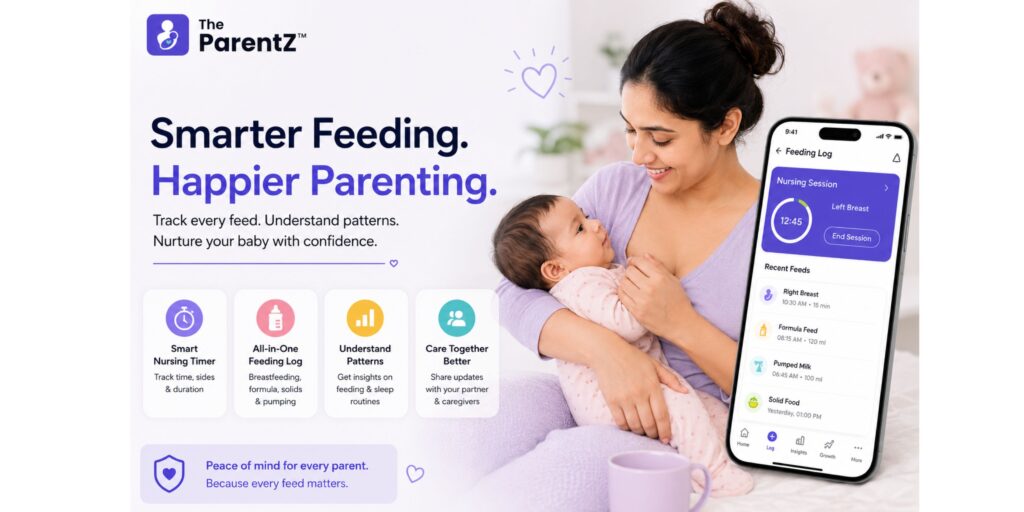
The Baby Feeding Tracker App with Nursing Timer from The Parentz helps parents organize feeding routines without adding unnecessary complexity.
Features can support:
- Feeding logs
- Nursing timers
- Pattern tracking
- Better caregiver coordination
- Easier routine management
The goal isn’t perfect parenting.
It’s calmer parenting.
Frequently Asked Questions
Is a baby feeding tracker app useful for breastfeeding?
Yes. Many parents use it to track duration, timing, and nursing sides.
Can nursing timers improve milk supply?
A timer itself doesn’t increase supply, but organized tracking may help parents understand feeding patterns.
Do feeding apps replace pediatric advice?
No. Apps organize information. Medical decisions should come from healthcare professionals.
How long should parents track feedings?
Many parents track consistently during the early months and gradually reduce later.
Is tracking necessary if feeding is going well?
Not always. Some parents use it daily. Others use it temporarily.
Key Takeaways
- Feeding trackers reduce mental overload
- Nursing timers simplify breastfeeding routines
- Shared tracking supports all caregivers
- Tracking helps reveal useful feeding patterns
- Simpler systems usually work better than perfect systems
Final Thoughts
If there’s one opinion worth sharing here, it’s this:
Modern moms aren’t switching to feeding tracker apps because parenting hasn’t become easier.
They’re switching because life has become busier.
And remembering every feed manually isn’t a badge of honor.
Sometimes the smartest parenting choice is simply removing unnecessary stress.
The Baby Feeding Tracker App with Nursing Timer from The Parentz helps turn feeding from a guessing game into something more manageable—and that gives parents more room for what actually matters.
Holding the baby.
Not holding all the information.