A pest inspection is an important part of maintaining a safe, comfortable, and well-protected home. Whether you have noticed signs of insects, heard scratching noises in the walls, or simply want to prevent future infestations, a professional inspection can help identify potential problems before they become serious.
However, homeowners can make the inspection more effective by preparing their property in advance. Providing easy access to important areas, organizing storage spaces, and identifying signs of pest activity can help inspectors complete a more thorough assessment.
Why Preparing for a Pest Inspection Matters
Pests often hide in places that homeowners rarely check, including basements, attics, wall gaps, storage areas, and spaces beneath appliances. If these areas are difficult to access, inspectors may have trouble identifying the full extent of an infestation.
Proper preparation helps inspectors examine more areas, recognize possible entry points, and identify conditions that attract unwanted pests.
For example, if you notice droppings, gnaw marks, or scratching sounds, share these details during the inspection. Such signs may indicate a rodent problem that requires attention. In situations involving active infestations, arranging emergency rodent control may be necessary to prevent further damage and reduce potential health risks.
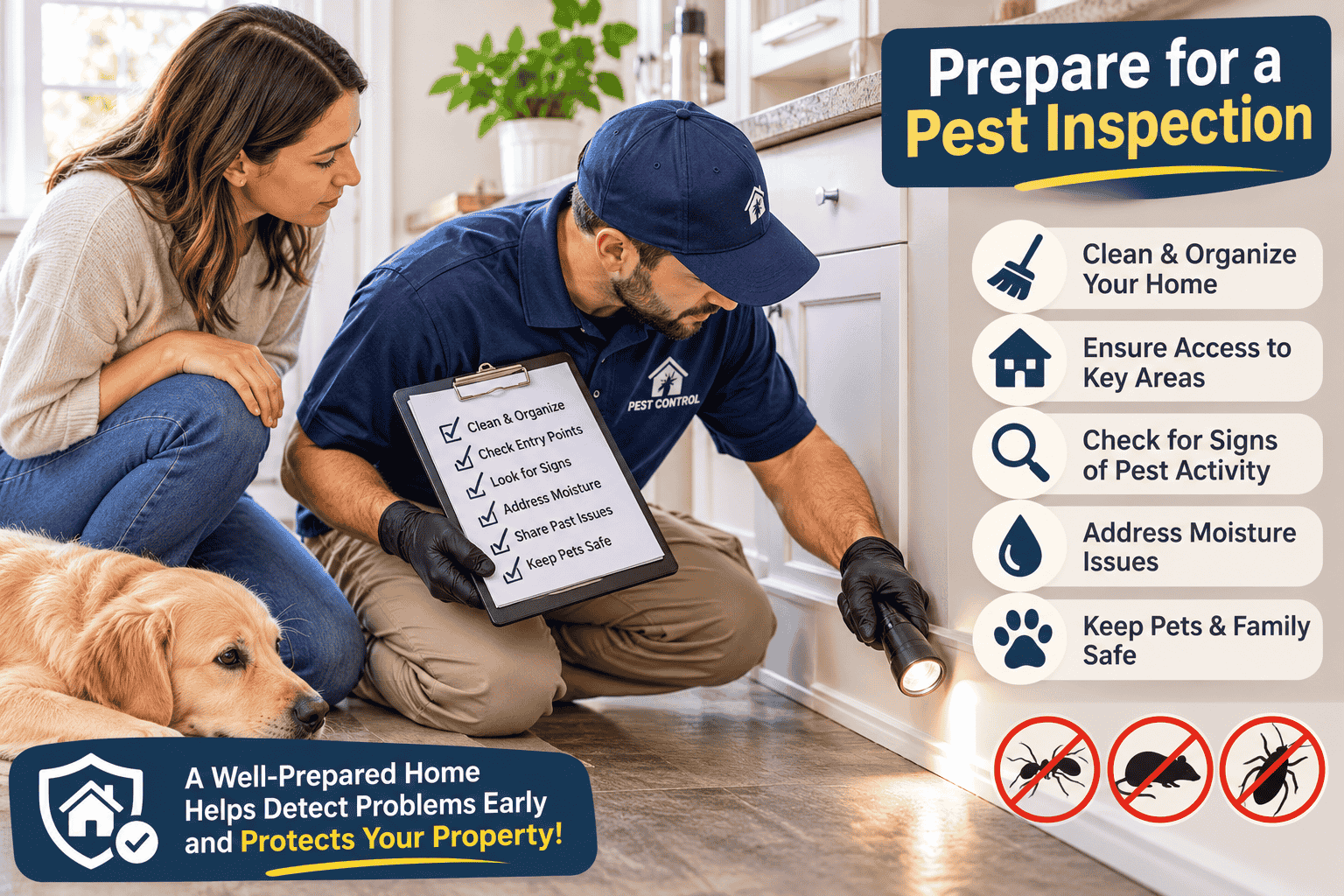
7 Practical Ways to Prepare Your Property for Inspection
1. Clean and Organize Your Home
Start by cleaning areas where pests are commonly attracted to food particles, grease, and waste. Pay particular attention to kitchens, dining areas, pantries, and storage spaces.
You should also:
- Remove leftover food and crumbs.
- Clean kitchen counters and floors.
- Empty indoor trash bins.
- Store food in sealed containers.
- Remove unnecessary clutter from corners.
A clean environment makes it easier for inspectors to identify pest evidence and inspect potential hiding places.
2. Clear Access to Common Pest Hiding Spots
Pests frequently establish themselves in areas that receive little attention. Move boxes, furniture, and stored belongings away from walls where possible.
Make sure inspectors can access:
- Basements and crawl spaces.
- Attics and garages.
- Utility rooms and storage closets.
- Areas beneath sinks.
- Spaces behind large appliances.
You do not need to empty every room. Simply making important inspection areas accessible can save time and improve the assessment.
3. Check for Visible Signs of Pest Activity
Before the inspection, take some time to look around your property for unusual signs.
Common indicators include droppings, damaged packaging, chewed wires, small holes, discarded insect skins, and unpleasant odors.
Do not attempt to remove every sign before the inspector arrives. These clues can help professionals understand which pests may be present and where further investigation is needed.
4. Inspect Doors, Windows, and Entry Points
Many pest problems begin when insects or rodents find small openings around a property.
Check door frames, window screens, foundation gaps, vents, and spaces around utility pipes. Look for damaged weather stripping or openings that could allow pests to enter.
Make a note of any gaps or damaged areas so the inspector can evaluate them and recommend suitable repairs.
5. Address Moisture and Plumbing Issues
Moisture attracts several types of pests, including cockroaches, ants, and termites. Leaking pipes, standing water, and poor drainage can create favorable conditions for infestations.
Before the inspection, check bathrooms, kitchens, laundry areas, and basements for leaks or damp spots.
If you notice persistent moisture, inform the inspector rather than covering up the affected area. Identifying the source is important for preventing recurring pest problems.
6. Prepare Information About Previous Pest Problems
If your property has experienced infestations in the past, share that information with the inspector.
Useful details include:
- Types of pests previously identified.
- Areas where activity was noticed.
- Previous treatments or repairs.
- Dates of recurring pest problems.
- Any changes noticed after treatment.
This information can help inspectors recognize recurring patterns and determine whether previous measures were effective.
7. Keep Pets and Family Members Safe
Arrange a comfortable and safe space for pets during the inspection, especially if the inspector needs access to several rooms or outdoor areas.
If pest treatment is recommended after the inspection, ask about any necessary precautions for children, pets, and household members. Follow the professional’s instructions regarding access and preparation.
What Homeowners Should Avoid Before an Inspection
Preparation is helpful, but certain actions can make the inspection less effective.
Avoid spraying pesticides immediately before the appointment unless directed by a professional. Chemical applications may interfere with identifying active pest activity.
You should also avoid sealing suspected entry holes, removing droppings, or discarding damaged materials before they have been examined. These signs can provide valuable information about the infestation.
Most importantly, do not ignore minor pest activity simply because it appears manageable. Small problems can develop into larger infestations when left unaddressed.
Conclusion
Preparing your property for a pest inspection does not require complicated work. Cleaning key areas, organizing storage spaces, checking possible entry points, and documenting previous pest activity can make the process more productive.
A well-prepared home allows inspectors to examine important areas and provide more useful recommendations. By taking these simple steps, homeowners can identify potential pest concerns earlier, protect their property, and make informed decisions about long-term pest prevention.