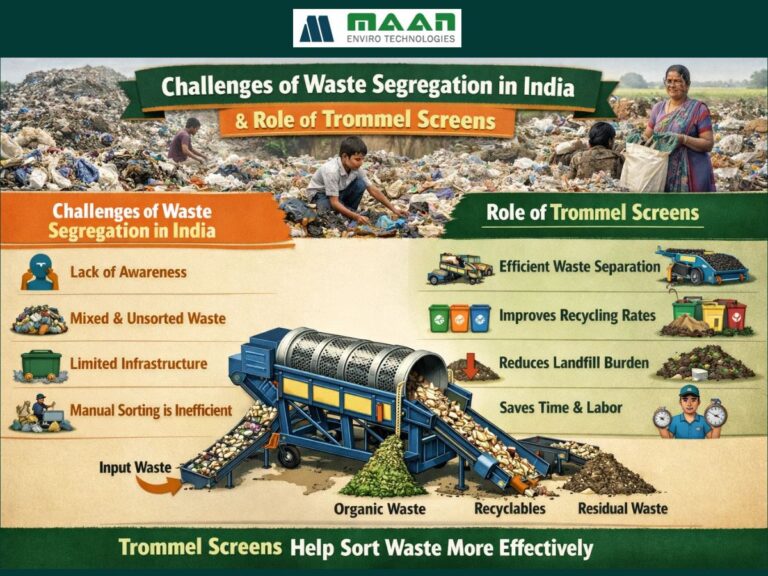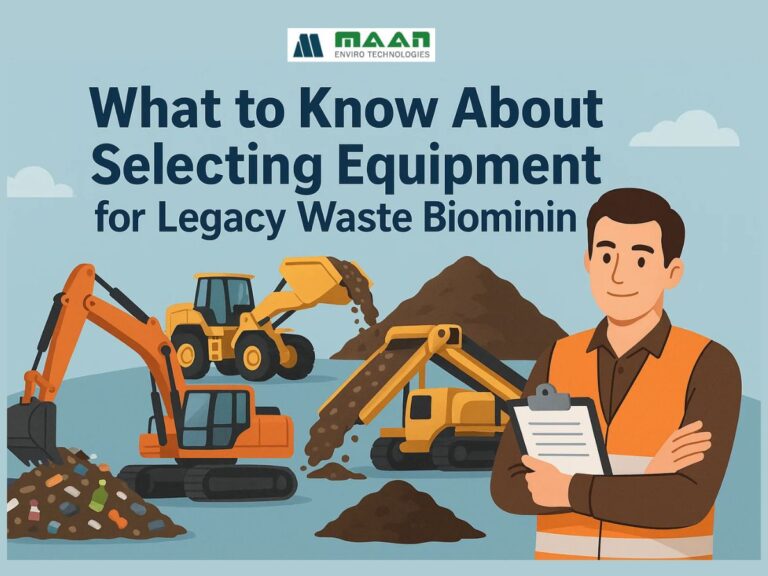
Across India, old dumpsites have grown into towering heaps of waste that pollute the air, contaminate groundwater, and swallow up valuable land. These sites are the result of decades of unscientific disposal, creating both environmental and health risks for nearby communities. What was once seen only as a burden is now being viewed differently. With the help of modern technology, from advanced screening equipment to waste-to-energy plants, legacy waste management in India is turning these neglected mounds into resources and opportunities for urban development.
What is Legacy Waste?
Legacy waste refers to old, accumulated waste lying in landfills or dumpsites for years. Unlike fresh municipal waste, this waste is already partially decomposed and mixed with soil and other materials, which makes it more complex to handle.
Main Features of Legacy Waste:
Large volumes collected over decades.
Contains biodegradable matter, recyclables, and inert debris.
Generates harmful leachate that pollutes soil and groundwater.
Releases methane and carbon dioxide into the atmosphere.
Occupies valuable urban land in crowded cities.
Why Legacy Waste Management is Critical in India
India generates more than 62 million tonnes of waste annually, and much of it ends up in open dumps. The Central Pollution Control Board (CPCB) reports that more than 3,000 dumpsites exist across the country, with some covering hundreds of acres.
Key Reasons It Matters:
Environmental Safety – Legacy dumps pollute soil, air, and water if left untreated.
Public Health – Open landfills increase the risk of diseases, especially for nearby communities.
Land Reclamation – Recovered land can be used for housing, parks, or infrastructure.
Resource Recovery – Compost, recyclables, and refuse-derived fuel can be extracted.
Sustainability – Proper treatment supports circular economy goals.
Technologies Driving Change in Legacy Waste Management
1. Biomining and Bioremediation
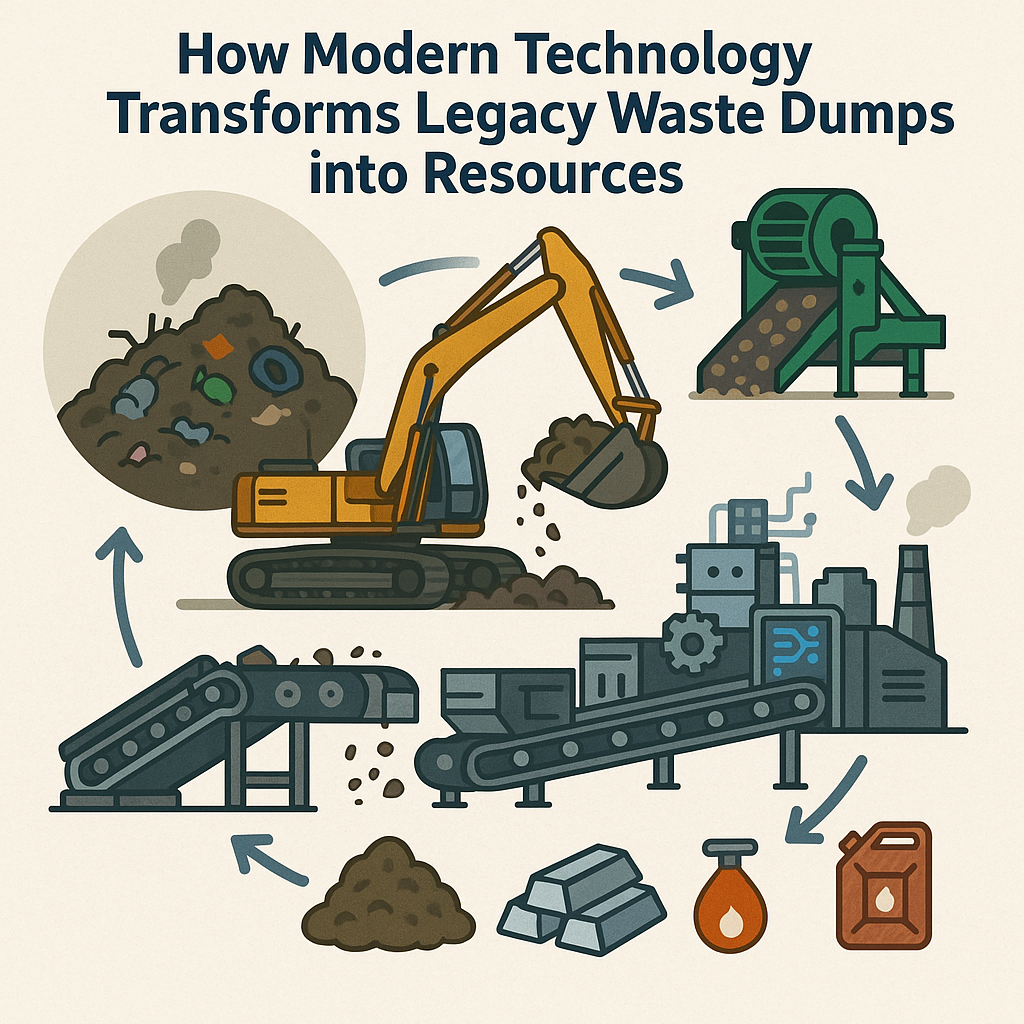
Biomining has become the most common approach to deal with old dumps. It includes excavation of legacy waste, separation using trommel and rotary screen machines, composting of biodegradable fractions, and recycling of recoverable materials. Cities like Indore and Pune have successfully used biomining to reclaim land and process thousands of tonnes of legacy waste.
How biomining works:
Waste is excavated from the dumpsite.
Trommel screen machines separate soil, compostable material, and recyclables.
Non-recyclable materials are processed into RDF.
Remaining inert material is used for construction or safe disposal.
2. Mechanical Screening and Separation
Large projects require efficient machines. Equipment such as trommel screens, rotary screen machines, and shredders make waste segregation faster and more accurate. These machines ensure higher recovery rates and reduce manual labour. For example, a 50 mm trommel screen can separate soil-like material from larger debris at high speed, making the entire process more effective.
3. Waste-to-Energy and RDF Plants
Not all waste can be composted or recycled. The non-recyclable fraction is often used in Refuse Derived Fuel (RDF) plants. This material is processed into fuel that can replace coal in cement kilns and power plants. Such integration reduces fossil fuel consumption while solving the issue of non-recyclable legacy waste.
4. Composting Units
A large part of legacy waste is biodegradable. Once separated, this fraction can be turned into compost or soil conditioners. This compost can be used in agriculture or landscaping, reducing the need for chemical fertilisers.
5. Future of Landfill Reclamation in India
The future of landfill reclamation in India lies in combining these technologies. Cities will need a mix of biomining, RDF processing, composting, and mechanical separation to completely eliminate old dumps. Challenges such as high costs, lack of awareness, and slow approvals exist, but the solutions are practical and already being tested at scale.
Challenges in Legacy Waste Management
Even with advanced technologies, several barriers slow down progress:
Financial Costs – Large dumps require big budgets, and many municipalities struggle to fund projects.
Technology Gaps – Not all regions have access to modern machines or trained manpower.
Regulatory Hurdles – Slow clearances and complex policies delay projects.
Community Resistance – Lack of awareness sometimes leads to opposition from residents.
Scale of the Problem – Some dumps are spread over hundreds of acres, requiring years of work.
Global Examples and Lessons for India
United States – Legacy landfills have been reclaimed and converted into parks, golf courses, and solar farms.
Germany – Advanced waste-to-energy facilities process legacy waste while generating power.
Singapore – With limited land, Singapore uses high-efficiency incineration plants to reduce landfill volume.
India can adopt similar practices while adjusting for local conditions, such as higher organic content in waste.
Benefits of Modern Legacy Waste Solutions
When properly managed, legacy waste dumps turn into valuable assets.
Cleaner Environment – Less air and water pollution.
Land Availability – Reclaimed land supports urban growth.
Economic Value – Sale of recyclables, compost, and RDF generates revenue.
Job Creation – Skilled and unskilled employment in waste processing.
Energy Production – RDF helps industries reduce coal use.
Role of Private Companies and Technology Providers
Many municipalities are partnering with private companies for faster implementation. For example, Maan Enviro Technologies designs and supplies trommel screens, rotary screening equipment, RDF plants, and composting units that are widely used in legacy waste projects. These solutions make it possible for cities to handle massive volumes of old waste efficiently and sustainably.
FAQs on Legacy Waste Management
1. What is legacy waste management?
Legacy waste management is the treatment and processing of old waste accumulated in landfills and dumpsites to reduce pollution and recover usable resources.
2. How is legacy waste different from fresh municipal waste?
Fresh municipal waste is generated daily, while legacy waste has been stored for years, partially decomposed, and mixed with soil and debris.
3. What methods are commonly used in India?
Biomining, trommel screening, composting, RDF processing, and safe disposal of inert materials are widely adopted.
4. Why is biomining considered effective?
Biomining separates different fractions of legacy waste, recovers recyclables, converts biodegradable material into compost, and reclaims land for future use.
5. What is the future of landfill reclamation in India?
The future lies in combining biomining, RDF plants, and modern equipment to achieve complete dumpsite reclamation, despite challenges of cost and awareness.
Conclusion
Legacy waste management in India is a challenge, but it also presents a huge opportunity. With biomining, trommel screens, RDF plants, and composting solutions, cities can convert old dumps into valuable resources. These technologies help reclaim land, reduce pollution, and move India closer to a sustainable, resource-efficient future.