
Introduction
Roundabouts are a regular part of driving in Hobart and across Tasmania, but they can feel challenging when you are still developing your confidence behind the wheel. A driver approaching a roundabout may need to read signs, select the correct lane, observe surrounding traffic, judge a safe gap, control vehicle speed and prepare for the correct exit—all within a short distance.
That combination can feel overwhelming for learner drivers. Some drivers slow down too much because they are unsure when to enter. Others focus so heavily on nearby traffic that they forget to plan their exit. The key is to break the process into manageable steps and develop good habits through regular practice.
Learning how to navigate roundabouts safely is not simply about passing a driving test. It is an important real-world skill that can improve decision-making, observation and confidence in busy traffic. A professional driving school can provide structured driving lessons that allow learners to practise these skills with guidance. Quality driver training in Hobart can also help learners become familiar with different road layouts and traffic situations they may encounter after receiving their licence.
Prepare Early Before Reaching the Roundabout
One of the biggest mistakes learner drivers make is waiting until the last moment to decide what they need to do. By the time you reach the entry point, you should already have a basic understanding of where you are going and what the road layout requires.
As you approach, begin by looking ahead for directional signs and lane markings. Identify the exit you need and position your vehicle appropriately before arriving at the roundabout. Early preparation reduces the pressure of making sudden decisions while other vehicles are moving around you.
Speed control is also important during the approach. Reducing speed gradually gives you more time to observe the situation and respond safely. It also helps you maintain better control of the vehicle if traffic requires you to slow further or stop.
Professional driving lessons help learners develop the habit of planning several steps ahead. Instead of reacting only to what is immediately in front of the vehicle, learners begin to recognise road signs, traffic patterns and possible hazards earlier. This skill is valuable at roundabouts, intersections, pedestrian crossings and many other road environments.
For instructors and driving professionals, teaching early preparation can help learners develop a calmer approach to complex road situations. When learners know what to look for before reaching a roundabout, they are less likely to panic or make rushed decisions.
Observe Traffic and Wait for a Safe Opportunity
Once you have prepared for the roundabout, the next task is observing traffic carefully. Roundabouts are constantly changing environments because vehicles may enter and exit from several different directions.
Avoid focusing only on one vehicle or looking for the first possible gap. Instead, assess the overall movement of traffic and give yourself enough time to decide whether entering is safe. If you are unsure, it is better to wait and reassess rather than forcing your vehicle into a situation that feels unsafe.
Patience is an important part of confident driving. Feeling pressure from vehicles behind you should never cause you to enter before you are ready. Safe decisions should always take priority over rushing.
A professional driving school can help learners practise traffic observation in real situations. During supervised driver training in Hobart, instructors can explain how traffic is moving and help learners understand why one opportunity may be safer than another.
Repeated exposure is particularly useful because traffic conditions are never exactly the same. A roundabout may be quiet during one lesson and busy during another. Experiencing different conditions helps learners improve their judgement gradually.
This type of practical training also benefits driving professionals because it allows them to identify individual weaknesses. Some learners may hesitate too much, while others may rush decisions. Targeted feedback can help each learner develop a safer balance between confidence and caution.
Maintain Control and Make Your Intentions Clear
After entering the roundabout, smooth and predictable driving becomes important. Other road users need to understand what you are doing, so avoid sudden movements that may create confusion.
Maintain appropriate control of your vehicle and follow the road markings throughout the roundabout. Good lane discipline is especially important at larger or multi-lane roundabouts. Making unnecessary lane changes or suddenly changing direction can increase the risk of mistakes.
Your speed should remain appropriate for the conditions. Entering too quickly can reduce your ability to observe and react, while inconsistent speed may make your actions difficult for other drivers to predict.
Clear communication also plays an important role. Correct signalling when required helps other road users understand your intentions, particularly as you prepare to exit. Predictable driving makes it easier for everyone around you to make safe decisions.
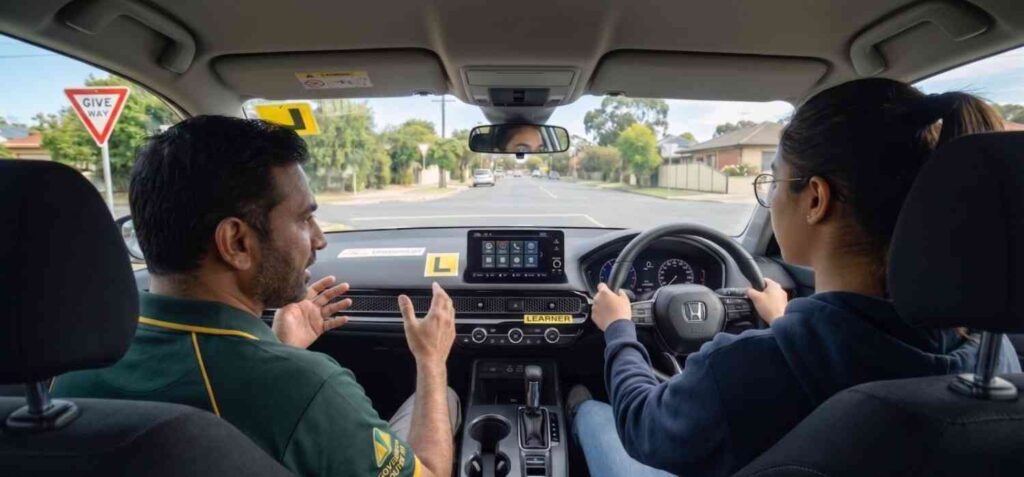
Structured driving lessons give learners the opportunity to practise vehicle control repeatedly. At first, a learner may need to consciously think about steering, speed, observation and positioning. With experience, these skills become more coordinated and natural.
Professional driver training in Hobart can expose learners to different types of roundabouts, from smaller suburban locations to busier intersections. This variety helps learners understand that the same core skills can be adapted to different road environments.
Continue Observing Until You Have Safely Exited
A common mistake is relaxing too early after entering a roundabout. Safe driving requires attention throughout the entire manoeuvre, including the approach, entry, circulation and exit.
Continue monitoring the road environment while travelling through the roundabout. Other vehicles may behave unexpectedly, and road users such as cyclists, motorcyclists and pedestrians may require additional attention.
Larger vehicles can also present different challenges because they may need more space when turning. Maintaining awareness of the surrounding environment allows you to anticipate situations rather than reacting at the last second.
Strong observation skills are developed through practice. Experienced instructors often encourage learners to scan the road rather than staring at a single vehicle or object. Effective observation means gathering information from different parts of the road environment while maintaining attention on the direction of travel.
A reputable driving school can help learners understand how observation supports safer decision-making. Regular driving lessons allow instructors to provide immediate feedback when a learner misses important information or becomes too focused on one part of the road.
For driving professionals, teaching continuous observation is particularly valuable because it supports many areas of safe driving. The same awareness used at roundabouts can help drivers identify hazards at intersections, changing traffic conditions and pedestrian areas.
Build Roundabout Confidence Through Regular Practice
Confidence does not usually appear after one successful attempt. It develops when learners experience similar situations repeatedly and begin to trust their ability to make safe decisions.
A learner may initially feel comfortable at small and quiet roundabouts before gradually progressing to busier locations. This step-by-step approach can prevent learners from feeling overwhelmed while still allowing them to develop their skills.
Regular practice also helps drivers understand that not every roundabout looks the same. Road markings, lane arrangements and traffic volumes can vary. The goal is not to memorise one specific roundabout but to develop the ability to observe, assess and respond safely wherever you are driving.
Comprehensive driver training in Hobart provides opportunities to practise in real traffic conditions with professional guidance. Instructors can help learners recognise areas that need improvement, such as lane positioning, speed control, observation or decision-making.
Feedback is one of the biggest advantages of professional training. When learners practise alone or repeat mistakes without understanding them, poor habits can become difficult to change. An experienced instructor can identify the cause of the problem and provide practical guidance for improvement.
Conclusion
Learning how to safely drive through roundabouts is an important part of becoming a confident and responsible driver. The process involves more than simply entering and exiting an intersection. Drivers need to prepare early, observe traffic carefully, maintain control, communicate their intentions clearly and remain aware until they have safely completed the manoeuvre.
The most important lesson for learner drivers is to avoid rushing. Taking the time to assess the situation and make a safe decision is far more valuable than trying to keep up with the pressure of surrounding traffic.
With support from a professional driving school, regular driving lessons, and practical driver training in Hobart, learners can gain valuable experience navigating different types of roundabouts. Over time, the decisions that once felt complicated can become more natural.
Roundabouts may seem intimidating during the early stages of learning, but confidence grows through knowledge, experience and consistent practice. By developing strong observation habits and safe decision-making skills, learner drivers can approach roundabouts with greater confidence and carry those skills into every part of their driving journey.