Table of Contents
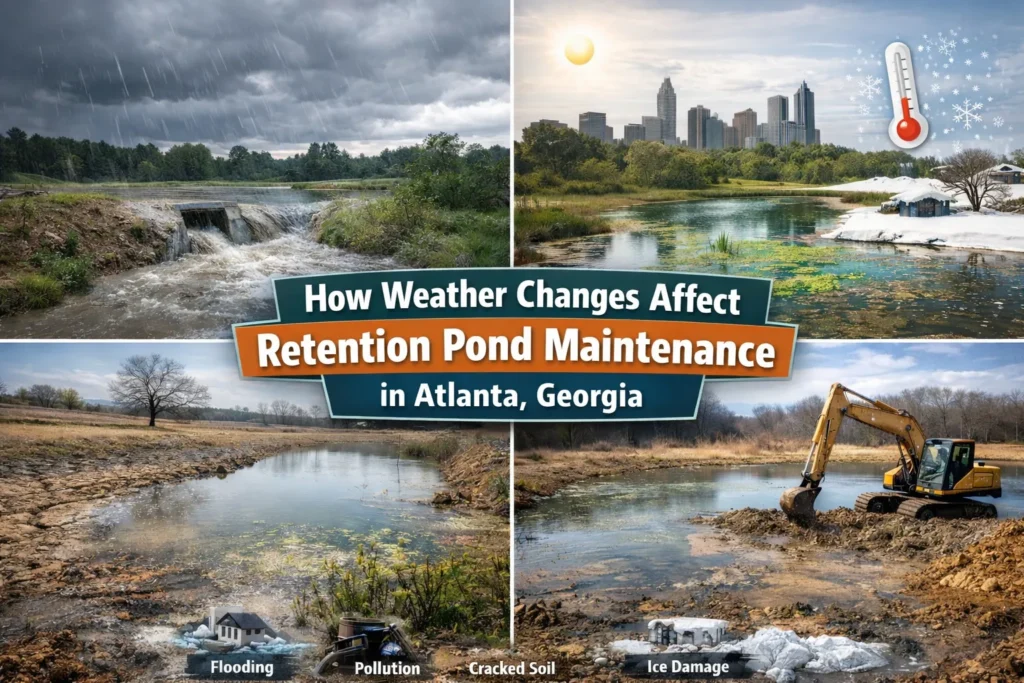
In Atlanta, the weather changes a lot throughout the year. We get strong rainstorms in spring and summer, hot and humid days for months, dry periods some years, and short freezing spells in winter. All of these weather shifts affect how a retention pond works.
A retention pond is built to collect rainwater and release it slowly. It helps prevent flooding, protects nearby creeks, and reduces soil erosion. But it only works properly if it is maintained properly. Weather directly impacts water levels, soil stability, plant growth, algae, and even the pond’s structure.
If you own or manage property in Atlanta, you cannot use the same maintenance routine year-round. You need to adjust based on the season and the weather patterns. This blog explains how the weather affects retention pond maintenance in Atlanta and what you should do about it.
What Is a Retention Pond and Why Does It Matter in Atlanta
A retention pond is a man-made pond designed to hold stormwater permanently. Unlike a detention pond, it always has water in it. When it rains, extra water flows in. The pond stores it and slowly releases it through a control structure.
In Atlanta, stormwater systems are especially important because:
- The city receives heavy rainfall.
- Many areas are paved with roads and parking lots.
- Development increases runoff.
- Flash flooding can happen quickly.
When rain hits pavement, it cannot soak into the ground. It runs off quickly and carries dirt, oil, trash, and other pollutants. The retention pond slows the water down and allows dirt and debris to settle at the bottom.
But weather changes affect how well this process works.
How Heavy Rain in Atlanta Affects Retention Ponds
Atlanta gets frequent thunderstorms, especially in spring and summer. Some storms drop large amounts of rain in a short time.
What Happens During Heavy Rain
When a strong storm hits:
- Water levels rise fast.
- Inlet pipes carry mud, leaves, and trash into the pond.
- Water may flow over the emergency spillway.
- The banks can erode.
- The outlet structure can clog.
If the pond cannot drain properly after a storm, it may stay too full for too long. That puts stress on the embankment and increases flood risk.
Problems Caused by Repeated Storms
If inspections are skipped after storms:
- Small erosion spots turn into deep channels.
- Sediment builds up faster.
- Pipes clog more often.
- Structural parts weaken over time.
In Atlanta’s climate, heavy rain is not rare. It is normal. That means post-storm inspections should also be normal.
What You Should Do After Heavy Rain
After major storms:
- Check the inlet and outlet for blockage.
- Remove trash and debris.
- Look for soil washing away on slopes.
- Check that the emergency spillway is clear.
- Confirm water levels return to normal within the expected time.
Quick inspections prevent expensive repairs later.
How Sediment Buildup Becomes a Bigger Issue Over Time
Every rainfall carries dirt into the pond. This dirt settles at the bottom. Over time, the pond becomes shallower.
Why Sediment Is a Serious Problem
Sediment reduces the pond’s storage capacity. When the bottom fills up:
- The pond cannot hold as much stormwater.
- Flood risk increases.
- Pollutants stay trapped in thick layers.
- Water may become cloudy and unhealthy.
In fast-growing parts of Atlanta, construction increases sediment runoff. That means ponds near development fill up faster.
How to Know If Sediment Is Too High
Signs include:
- Water depth looks much lower than before.
- You see mud flats near the edges.
- Water spreads out wider than usual.
- Drain time after storms increases.
A professional sediment survey measures the actual depth and compares it to the original design.
Most retention ponds need dredging every 5 to 10 years, but some need it sooner depending on runoff conditions.
How Summer Heat Affects Retention Pond Maintenance
Atlanta summers are hot and humid. Long stretches of 90°F to 100°F weather are common.
Increased Algae Growth
Warm water helps algae grow faster. If nutrients from fertilizers enter the pond, algae can spread quickly.
Too much algae can:
- Turn the water green.
- Produce bad odors.
- Reduce oxygen levels.
- Harm fish and aquatic life.
Faster Plant Growth
Grass and aquatic plants grow faster in summer. If not trimmed:
- Slopes become hard to inspect.
- Inlet and outlet structures get blocked.
- Roots may grow into structural areas.
What You Should Do in Summer
- Mow embankments regularly.
- Remove invasive plants.
- Monitor algae growth.
- Keep access paths clear.
- Check aeration systems if installed.
Summer requires more frequent vegetation management than any other season.
How Drought Periods Affect Retention Ponds
Atlanta occasionally experiences dry periods.
What Happens When Water Levels Drop
During drought:
- Water levels fall.
- Pond liners may become exposed.
- Soil on slopes may crack.
- Young trees may start growing on embankments.
Cracked soil can weaken the structure. When heavy rain returns, erosion may worsen.
Why Trees Are Dangerous on Embankments
Trees may look harmless, but their roots can:
- Create seepage paths.
- Weaken the dam structure.
- Causes long-term structural damage.
Trees should never grow on pond embankments.
Maintenance During Dry Conditions
- Inspect exposed areas.
- Remove young trees immediately.
- Repair cracks early.
- Prepare for future heavy rainfall.
How Freezing Temperatures Affect Retention Ponds in Atlanta
Atlanta winters are not severe, but freezing does occur.
Freeze and Thaw Cycles
When temperatures drop below freezing and then rise again:
- Concrete can crack.
- Small gaps expand.
- Riprap stones may shift.
- Pipes can loosen.
These small issues may not look serious at first, but repeated freeze and thaw cycles weaken structures over time.
Winter Inspection Checklist
- Look for cracks in concrete.
- Check joints in outlet structures.
- Inspect slopes for burrowing animals.
- Confirm drainage remains steady.
Winter is a good time to focus on structural checks since plant growth slows down.
Urban Runoff and Pollution in Atlanta
Atlanta has heavy traffic and expanding development. Runoff from paved surfaces carries pollutants into retention ponds.
Common pollutants include:
- Oil from vehicles
- Tire particles
- Trash
- Fertilizer runoff
- Heavy metals
Retention ponds trap many of these materials. But if sediment is not removed, pollutants accumulate and reduce performance.
Regular cleaning keeps the pond functioning properly and supports local water quality.
How Often Should Retention Ponds Be Inspected in Atlanta?
For most properties:
- Inspect quarterly.
- Inspect after major storms.
- Conduct annual professional review.
- Perform sediment depth checks every few years.
HOAs and commercial property managers should document inspections. Good records protect you if compliance questions arise.
Common Questions About Retention Pond Maintenance in Atlanta
1. What happens if a retention pond is not maintained?
The pond may flood nearby property, lose storage capacity, grow excessive algae, fail inspections, and require expensive repairs.
2. How do I know if my retention pond is failing?
Warning signs include erosion, clogged outlets, standing water that does not drain properly, strong odors, and visible sediment buildup.
3. How much does retention pond maintenance cost in Atlanta?
Costs vary depending on pond size and condition. Routine maintenance is much cheaper than major dredging or structural repairs.
4. Who is responsible for maintaining a retention pond?
Usually, the property owner, HOA, or commercial property manager. Local government enforces compliance but does not maintain private ponds.
Seasonal Maintenance Plan for Atlanta Property Owners
Spring
- Inspect after storms.
- Repair erosion.
- Clear debris.
- Prepare for the heavy rain season.
Summer
- Control vegetation.
- Monitor algae.
- Inspect water levels.
Fall
- Remove fallen leaves.
- Check structures before winter.
- Evaluate sediment buildup.
Winter
- Inspect concrete and pipes.
- Remove woody growth.
- Check for animal burrows.
Key Takeaways
- Atlanta’s heavy rain increases erosion and sediment buildup.
- Summer heat leads to algae and fast vegetation growth.
- Drought weakens embankments and allows trees to grow.
- Freeze and thaw cycles damage concrete and pipes.
- Regular inspections prevent major failures.
- Sediment removal restores proper storage capacity.
- Weather-based maintenance planning protects your property.
Protect Your Retention Pond from Atlanta’s Changing Weather
Weather changes in Atlanta directly affect retention pond performance. Rainstorms stress the system. Heat fuels algae growth. Drought weakens soil. Freezing temperatures impact structures.
A retention pond needs active management throughout the year. If you ignore weather patterns, small maintenance issues can grow into serious structural problems.
Review your current maintenance plan. Make sure inspections happen after heavy rain. Monitor sediment levels. Remove trees from embankments. Control vegetation in summer. Check structures in winter.
If you are unsure about the pond’s condition, schedule a professional inspection. Staying ahead of weather-related problems protects your property, reduces flood risk, and keeps your stormwater system working as designed.
Taking action now is always more affordable than repairing damage later.
Written By: Aquatic Restoration (Since 1970)
Also Check:
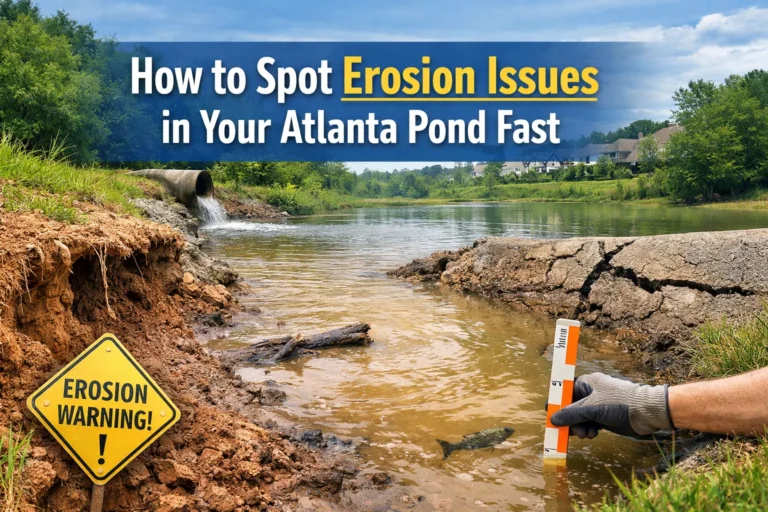
How to Spot Erosion Issues in Your Atlanta Pond Fast
10 Winter Tips (From Experts) for Retention Ponds in Atlanta