Legacy waste has become a major concern for cities across India. Over time, old dumpsites have turned into massive landfill mounds that occupy valuable land and create serious environmental risks. Biomining of legacy waste is now seen as one of the most sustainable and cost-effective ways to tackle this challenge by turning waste back into usable land and valuable resources.
However, the success of any biomining project depends on selecting the right equipment. The right machinery ensures efficient processing, better recovery rates, and lower operational costs.
Understanding Biomining of Legacy Waste
Biomining of legacy waste involves excavating, segregating, and processing old municipal solid waste (MSW) dumped at landfill sites. Using a mix of mechanical and biological methods, the process helps recover recyclables, stabilise organic matter, and reclaim land for new use.
It includes two main stages:
Bio-remediation, which uses naturally produced organisms to break down biodegradable materials into stabilised humus.
Mechanical segregation, which separates recyclable and inert materials for reuse or safe disposal.
Together, these methods reduce landfill volume, control pollution, and support the goal of zero-landfill cities.
Why Equipment Selection Matters
The right machinery is the backbone of a successful biomining operation. Well-selected equipment improves sorting accuracy, minimises manual handling, and increases recovery of materials such as plastics, metals, and soil fractions.
Poor or mismatched equipment can lead to breakdowns, downtime, and higher costs. Each stage of biomining, from excavation and screening to segregation and disposal, requires properly designed and reliable machines suited to local conditions.
Key Equipment Used in Biomining of Legacy Waste
Here are the main types of equipment used in a typical biomining setup and how they contribute to the process.
1. Excavators and Loaders
These machines are used for digging and moving waste from landfill mounds. Hydraulic excavators with strong reach and stable performance are preferred for uneven dump site conditions.
2. Trommel Screens
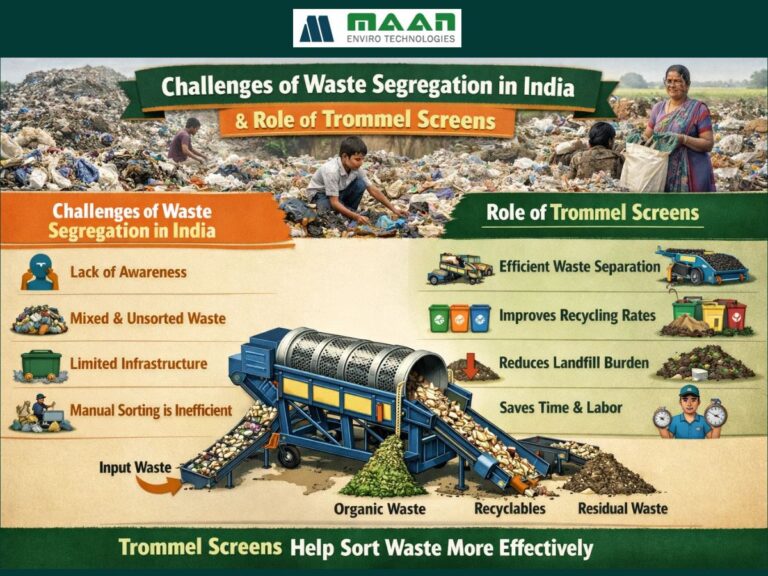
Trommel screens are the heart of any biomining system. They separate waste based on particle size and help classify materials such as soil, plastic, metal, and inert fractions.
Screen sizes typically range from 50 mm to 150 mm, depending on the waste composition.
Custom drum designs can improve screening efficiency and reduce clogging.
3. Conveyors and Feed Hoppers
Conveyors carry the material between stages, ensuring continuous operation. Feed hoppers manage the input rate, maintaining a steady flow and preventing machine overload.
4. Magnetic and Air Separators
Magnetic separators recover ferrous metals, while air separators remove light materials such as plastics and paper. These systems help improve recovery rates and reduce the final waste volume.
5. Composting Units
During the bio-remediation phase, composting units or windrow turners process organic fractions into stabilised compost. This compost can be used as a soil conditioner for landscaping and greenbelt projects.
6. Dust and Odour Control Systems
Dust suppression and odour management systems are important for maintaining clean and safe working conditions. Water misting and bio-filters are common solutions for these concerns.
How to Select the Right Equipment
Selecting the correct equipment for biomining of legacy waste requires a careful assessment of project needs, waste characteristics, and budget. Below are the key factors to consider.
1. Assess Waste Characteristics
Each dumpsite contains a different mix of biodegradable, recyclable, and inert waste. A pre-assessment survey helps identify which machines and screen sizes will perform best.
2. Consider Processing Capacity
Choose equipment that suits your plant’s processing requirements. Large-scale projects might need trommel screens with 50 to 100 TPD capacity, while smaller facilities can operate efficiently with compact systems.
3. Prioritise Durability and Easy Maintenance
Biomining environments are tough on machinery. Equipment should be corrosion-resistant, easy to service, and designed for continuous operation. Machines with modular structures allow faster repairs and upgrades.
4. Focus on Energy Efficiency
Energy-efficient motors and automation help reduce long-term costs and environmental impact. Selecting eco-friendly machinery also supports compliance with sustainability guidelines.
5. Work with Trusted Manufacturers
Partnering with reliable manufacturers ensures better technical support, training, and spare parts availability. Maan Enviro Technologies provides complete waste processing solutions, from equipment design to installation and maintenance.
Biomining and India’s Landfill Reclamation Effort
The Indian government is prioritising biomining to reclaim old landfill sites and promote sustainable urban development. This national drive supports the Swachh Bharat Mission and encourages cities to eliminate legacy waste by converting dumpsites into usable land.
To learn more about this initiative, check out this post on why the government supports biomining.
As cities adopt modern biomining practices, the demand for efficient and durable equipment continues to grow. Investing in the right machines helps both the environment and the economy by recovering resources that were once considered waste.
Benefits of Modern Biomining Equipment
Upgrading to modern equipment provides several long-term benefits, including:
Higher recovery rates for recyclables and soil fractions
Reduced manual handling and improved worker safety
Faster project completion with consistent output
Lower maintenance and operational costs
Compliance with environmental standards
Example of a Modern Biomining Process
At Maan Enviro Technologies, our biomining facilities are designed for efficiency and sustainability. A typical process includes:
Excavation of waste from dumpsites using hydraulic excavators
Screening through trommel screens to separate material by size
Segregation using magnetic and air separators to recover valuable components
Bio-remediation through microbial treatment to stabilise organic matter
Reuse and Recycling of recovered soil, compost, and recyclables
This system can reduce dump size by up to 20 percent and supports the mission of achieving zero-landfill cities.
FAQs on Biomining of Legacy Waste
What is the main goal of biomining legacy waste?
The goal of biomining is to recover useful materials and reclaim land occupied by old dumpsites. It reduces pollution and supports circular economy principles.
How long does a biomining project take to complete?
Depending on the dumpsite size and waste composition, a biomining project can take from a few months to over a year.
What kind of waste can be processed in biomining?
Biomining can handle mixed municipal solid waste, including plastics, metals, soil, and decomposed organic materials.
Is biomining cost-effective for smaller cities?
Yes. Compact biomining systems are available for small municipalities that need affordable and efficient landfill reclamation.
How is biomining different from landfilling?
Unlike landfilling, which simply buries waste, biomining processes and recovers it. This method saves land and reduces long-term environmental risks.
Final Thoughts
Selecting the right equipment for biomining of legacy waste is vital for building cleaner and more sustainable cities. With proper planning and advanced technology, waste can truly be turned into a valuable resource.
For reliable biomining systems and waste processing solutions designed for Indian conditions, contact Maan Enviro Technologies, your trusted partner in transforming waste into opportunity.