
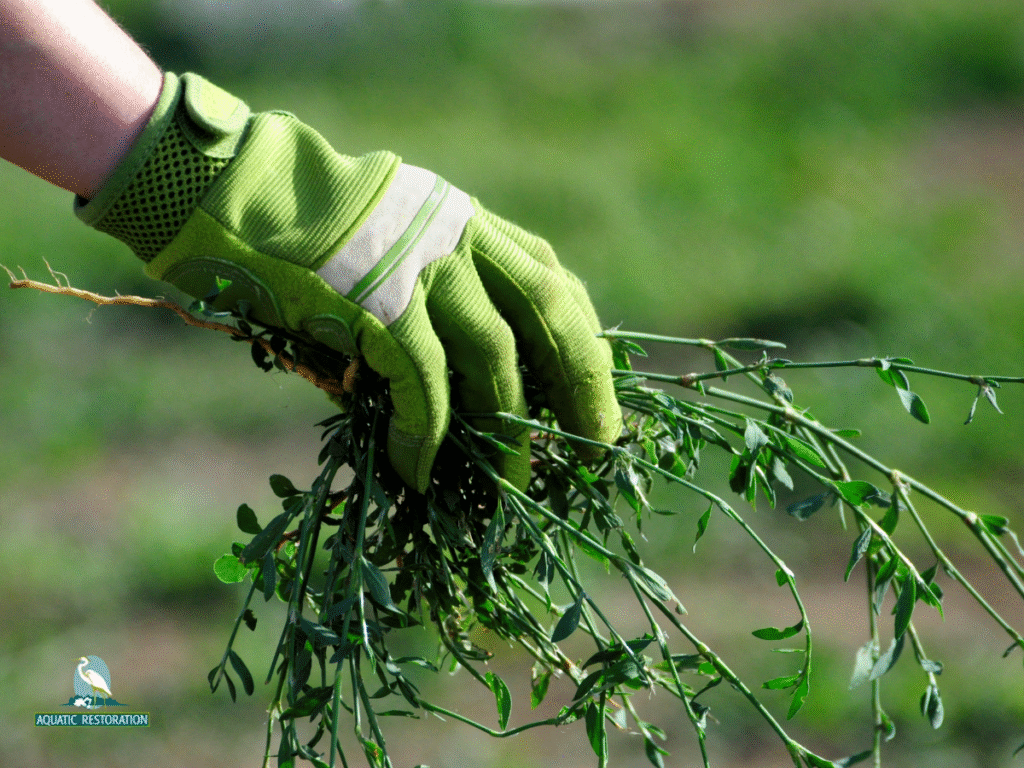
Weeds in a retention pond might look harmless at first, but if left unchecked, they can block water flow, harm aquatic life, and even cause flooding. Proper weed control is a key part of retention pond maintenance in Atlanta, where weather and rainfall patterns can quickly turn a small problem into a big one.
This guide explains practical, easy-to-understand tips that anyone — whether a property manager, HOA member, or homeowner — can follow to keep their pond clean, functional, and weed-free all year round.
What is a Retention Pond and Why Weeds Grow There
A retention pond is a man-made pond designed to collect and store stormwater runoff from rain. These ponds are common in Atlanta, Georgia, because the region gets frequent rains and stormwater needs to be managed to prevent flooding and erosion.
The pond holds water permanently (unlike a detention pond that dries up between rains). Over time, weeds, algae, and invasive plants can start growing because:
- Sunlight reaches shallow areas of the pond
- Nutrients from fertilizers or soil erosion feed plant growth
- Water movement slows down, giving weeds time to spread
- Lack of regular maintenance
These weeds not only make the pond look untidy but also block pipes, reduce oxygen levels in the water, and disturb the pond’s natural ecosystem.
Why Weed Control is So Important in Retention Pond Maintenance
Proper weed control ensures that the pond continues to function as designed. Here’s why it matters:
- Prevents water blockage: Overgrown weeds can block inlets, outlets, and pipes.
- Stops mosquito breeding: Weeds trap stagnant water — a perfect mosquito habitat.
- Protects aquatic life: Balanced vegetation keeps oxygen levels stable.
- Improves property value: A clean pond adds beauty and safety to your surroundings.
- Maintains compliance: Many local authorities in Atlanta have regulations on pond upkeep.
10 Practical Tips for Weed Control in a Retention Pond
Let’s go through ten practical and proven ways to manage weeds effectively — using simple steps anyone can follow.
1. Inspect the Pond Regularly
Regular inspection is the foundation of good retention pond maintenance in Atlanta.
Walk around the pond every few weeks to check for early weed growth, clogged drains, or unusual plant patches.
- Use a stick or rake to check shallow edges.
- Look for fast-growing species like cattails, duckweed, or algae mats.
- Note any floating or submerged weeds before they spread.
Early detection saves time and cost later.
Example:
If you spot cattails in a small patch, removing them by hand now is far easier than dealing with an entire pond covered with them a month later.
2. Control Nutrient Runoff
Most weed problems start with too many nutrients (like nitrogen and phosphorus) entering the pond through rainwater or lawn fertilizers.
To control this:
- Create a buffer zone of native grasses around the pond. These plants absorb excess nutrients.
- Avoid fertilizing lawns or gardens near the pond edge.
- Divert runoff from fertilized areas through gravel or mulch barriers.
This step not only limits weed growth but also improves water quality.
3. Introduce Native Plants
Native aquatic plants are nature’s best defense against weeds. They grow in balance with the local ecosystem and compete with invasive species for light and nutrients.
In Atlanta, good native options include:
- Soft rush (Juncus effusus)
- Pickerelweed (Pontederia cordata)
- Arrowhead (Sagittaria latifolia)
Plant them along pond edges — not in deep water — to stabilize soil and filter runoff.
Pro tip: Avoid planting aggressive species like hydrilla or alligator weed, as they can quickly take over.
4. Use Manual Removal Methods First
Before using chemicals, try manual weed removal. It’s safer for fish, pets, and the environment.
You can:
- Rake or cut weeds near the surface
- Pull out floating weeds with nets
- Use aquatic weed cutters for submerged growth
Manual removal works well for small ponds or early infestations. Make sure to dispose of the weeds away from the pond, as seeds can wash back in during rain.
5. Maintain Proper Water Depth
Weeds often grow in shallow water where sunlight easily penetrates. Maintaining proper water depth helps control them naturally.
For retention ponds in Atlanta, an ideal depth is around 4–6 feet in most areas.
If sediment buildup has made your pond shallower, consider dredging or removing silt. This also helps improve water flow and reduces stagnation.
Tip: Schedule dredging every few years, depending on runoff and soil erosion.
6. Aerate the Pond
Stagnant water is the best friend of weeds and algae. Installing a pond aeration system (like a fountain or underwater bubbler) increases oxygen levels and water circulation.
Benefits include:
- Reduces algae and weed growth
- Keeps fish healthy
- Prevents foul smell
- Improves pond aesthetics
Aeration systems are common in professional retention pond maintenance services in Atlanta because they work quietly, efficiently, and continuously.
7. Use Aquatic Herbicides Carefully
Sometimes weeds grow beyond control, and physical removal isn’t enough. In such cases, herbicides can be used — but carefully.
Choose EPA-approved aquatic herbicides and apply them as per instructions. Always:
- Read the label before use
- Avoid applying before rain (to prevent runoff)
- Use spot treatment instead of spraying the entire pond
If unsure, hire a licensed pond maintenance expert in Atlanta to do the job safely.
8. Monitor and Manage Algae Growth
Algae are a type of aquatic plant, and while some are normal, too much can harm the pond.
To manage algae:
- Limit nutrient input (as discussed in Tip #2)
- Use natural algae control agents like barley straw
- Add aeration to keep the water oxygenated
Excessive algae often signals a nutrient imbalance. Treating algae alone won’t solve the root cause — you must also reduce nutrient flow into the pond.
9. Establish a Routine Maintenance Plan
Weed control is not a one-time job — it’s an ongoing process.
Create a simple routine maintenance plan that includes:
- Monthly inspections
- Seasonal cleaning (before and after heavy rains)
- Annual vegetation check
- Sediment testing every few years
If managing on your own feels difficult, hire retention pond maintenance professionals in Atlanta who provide scheduled services, including weed control, dredging, and water testing.
10. Educate Community or Property Members
If the pond is part of a residential community or business complex, involve everyone.
Weed control becomes much easier when everyone understands how their actions impact the pond.
Encourage:
- Not dumping grass clippings or leaves into the pond
- Avoiding over-fertilization of nearby lawns
- Reporting weed growth early
Community participation ensures the pond stays clean and functional for years.
Common Questions People Also Ask
1. How do I know if weeds in my retention pond are harmful?
If the weeds start blocking water flow, form thick mats, or cover more than one-third of the pond surface, they’re harmful. Safe aquatic plants grow in moderation, but invasive ones grow fast and spread everywhere.
2. Can I use household weed killers for retention ponds?
No, regular weed killers (like those used on lawns) are not safe for aquatic use. They can harm fish and pollute water. Always choose aquatic-safe herbicides or contact a pond maintenance service in Atlanta.
3. How often should a retention pond be cleaned?
Basic cleaning (like removing leaves and trash) should be done every month. Deep cleaning or dredging may be needed every few years, depending on how much sediment and vegetation build up.
4. What happens if weeds are not controlled in a pond?
Uncontrolled weeds reduce water depth, block drains, breed mosquitoes, and make the pond smell bad. Over time, the pond may stop functioning as a stormwater control system and could cause flooding during heavy rain.
5. Can fish help control weeds?
Yes, certain fish like grass carp can eat aquatic plants and help manage weed levels. However, they should be used with expert advice, as too many fish can unbalance the ecosystem.
Key Takeaways
- Inspect regularly: Early action prevents big problems.
- Control nutrient runoff: Less fertilizer means fewer weeds.
- Use native plants: They naturally balance pond vegetation.
- Aerate and dredge: Keep water healthy and deep.
- Avoid harmful chemicals: Always choose aquatic-safe products.
- Plan long-term maintenance: Schedule routine checks.
- Educate everyone involved: Community awareness matters most.
Final Thoughts
Weed control in retention ponds is about balance, not elimination.
A few plants help filter water and support aquatic life, but too many can turn a healthy pond into a swamp.
In a city like Atlanta, where rainfall and temperature changes are frequent, regular retention pond maintenance is essential. By following these simple, practical tips — from controlling nutrients to adding aeration — you can keep your pond clean, functional, and safe for the long term.
If your pond already has overgrown weeds or drainage issues, it’s best to consult a local retention pond maintenance expert who can inspect, treat, and set up a maintenance schedule tailored to your property.
A well-maintained pond doesn’t just manage stormwater — it adds life, beauty, and value to your surroundings.
Written By: Aquatic Restoration
At Aquatic Restoration, we’ve been helping Georgia pond and lake owners since 1970. Our services include shoreline stabilization, spillway renovation, siphon installation, lake management, dredging, and retention pond maintenance. We fix problems without harming your land or budget.Phone: 770-592-5099 | 678-949-3973
Mail: chris@aquaticrestoration.net
Website: www.aquaticrestoration.net
Find on Google Maps: https://maps.app.goo.gl/HYvUbp4XReUuhjST7
Also Check >>> How Often Should a Retention Pond Be Cleaned?


[…] 10 Tips for Weed Control in Retention Pond […]