Introduction
A p1 assessment tasmania is an important step between supervised learner driving and getting behind the wheel independently. It is designed to assess how well you can manage a vehicle, understand traffic situations and respond safely to hazards. The assessment is not simply about remembering road rules or completing a familiar route. You need to demonstrate practical judgement, observation and control throughout the drive.
For eligible learners, the assessment comes after completing the required learner stages, supervised driving experience and Hazard Perception Test. Tasmania’s Transport Services explains that the practical assessment is intended to determine whether a learner has developed sufficient safe driving skills to progress towards driving alone.

What happens during a P1 assessment Tasmania?
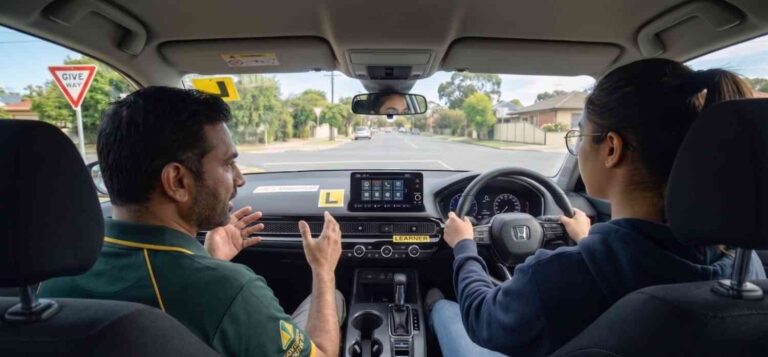
A p1 assessment tasmania takes place on public roads with a government or authorised P1 driving assessor. The assessor gives you directions while observing how you control the vehicle, respond to traffic and make decisions. You remain responsible for driving safely throughout the assessment.
The drive is designed to reflect real-world driving rather than a simple checklist of isolated manoeuvres. Tasmania’s driver competency standard considers skills such as operating and controlling the vehicle, driving within the traffic system, minimising conflict, managing unexpected situations and reviewing or adjusting your driving.
During the p1 assessment tasmania, you may be asked to follow directions, identify hazards around the vehicle and complete specific driving exercises. Transport Services information describes exercises that can include identifying hazards while continuing to drive safely, merging onto a highway and completing a safe and legal turn-around exercise.
That means you should not prepare by memorising a particular street or expecting the assessor to tell you exactly what to do at every moment. The better approach is to understand why you are making each driving decision.
What should you practise before the P1 assessment Tasmania?
Preparing for a p1 assessment tasmania means building consistent driving habits across different roads and situations. Practise residential streets, busier roads, intersections, roundabouts, lane changes, parking areas, hills and higher-speed roads where appropriate.
Hobart provides a useful example because some streets have significant slopes. If you drive a manual vehicle, practise hill starts until you can coordinate the controls smoothly while keeping your attention on surrounding traffic. A hill start should not become a distraction from checking mirrors and observing what is happening around the vehicle.
Weather should also form part of your preparation. Tasmania can experience wet and changeable conditions, so supervised practice in rain can help you understand how visibility, grip and stopping distances affect your driving. You may need to reduce your speed, increase your following distance and make smoother inputs.
Do not restrict your practice to roads you already know. An unfamiliar intersection can reveal whether you are genuinely observing signs, lane markings, traffic flow and other road users or simply relying on memory.
What does the assessor look for during the assessment?
During a p1 assessment tasmania, the assessor looks at how you apply your driving knowledge in real situations. Observation, vehicle control, road positioning, speed selection, signalling, hazard awareness and decision-making all contribute to the overall assessment.
Good observation means more than looking directly ahead. You need to understand what is happening around your vehicle and recognise situations that may develop into hazards. Tasmania’s competency standard places emphasis on higher-order skills, including decision-making, scanning, identifying hazards and responding appropriately.
Consider a simple example. You are driving through a suburban area and notice a pedestrian standing close to a crossing. Even if the person has not stepped onto the road, you should already be considering what could happen next and adjusting your attention accordingly.
Wildlife provides another practical Tasmanian example. Around rural roads or bushland at dawn and dusk, an animal may be close to the roadside. Seeing it early gives you more time to consider your speed and prepare for a possible movement onto the road.
A driving school can be useful during preparation because an experienced instructor can observe habits that you may not notice yourself. They can also place you in different traffic situations and give specific feedback on where your decision-making or vehicle control needs improvement.
How can professional driver training help?
Quality driver training should prepare you to think independently rather than simply repeat a set sequence of actions. The purpose of driving lessons is not to make every practice drive identical. It is to help you understand traffic situations and develop responses that remain useful on unfamiliar roads.
For example, an instructor might ask you to identify potential hazards while continuing to drive safely. They may also encourage you to explain why you selected a particular speed or road position. This type of practice can strengthen your ability to anticipate problems before they become urgent.
As your p1 assessment tasmania approaches, try to reduce the amount of prompting you receive. You should gradually become more comfortable identifying hazards, checking mirrors, planning ahead and making decisions without waiting for instructions.
Professional practice can also help you recognise small habits before they become assessment problems. Late mirror checks, inconsistent signalling, poor following distance or rushing through intersections may feel minor during casual driving, but they can indicate that a learner needs more practice.
The aim is not to drive perfectly. It is to demonstrate consistent, safe behaviour while remaining aware of changing conditions.
What should you know before booking a P1 assessment Tasmania?
Before booking a p1 assessment tasmania, make sure you have completed the requirements that apply to your licence stage. Transport Services states that eligible novice learners need to have held their learner licence for the required period, completed the required supervised driving experience and passed the Hazard Perception Test before undertaking the practical assessment. Current requirements should always be checked with Transport Services because licensing rules and processes can change.
The assessment can be booked with a government assessor or, where available, an authorised P1 driving assessor. Tasmania currently provides assessment locations across areas including Hobart, Launceston, Burnie and Devonport, along with additional locations for eligible drivers.
If you use an authorised non-government assessor, check the arrangements before booking. Additional charges may apply for services such as vehicle hire or familiarisation, and separation rules apply where the assessor has previously provided instruction.
You should also make sure the vehicle you use is suitable for the assessment. Becoming familiar with the vehicle before the day can reduce unnecessary stress and allow you to concentrate on the road rather than searching for controls.
Conclusion
A p1 assessment tasmania is more than a final drive before receiving your provisional licence. It is an opportunity to demonstrate that you can manage real traffic, recognise hazards and make safe decisions without constant supervision. Prepare by driving on varied roads, practising in changing conditions and addressing your weaker skills. Good preparation should not only help you approach the assessment with confidence; it should give you habits that support safer driving for years to come.