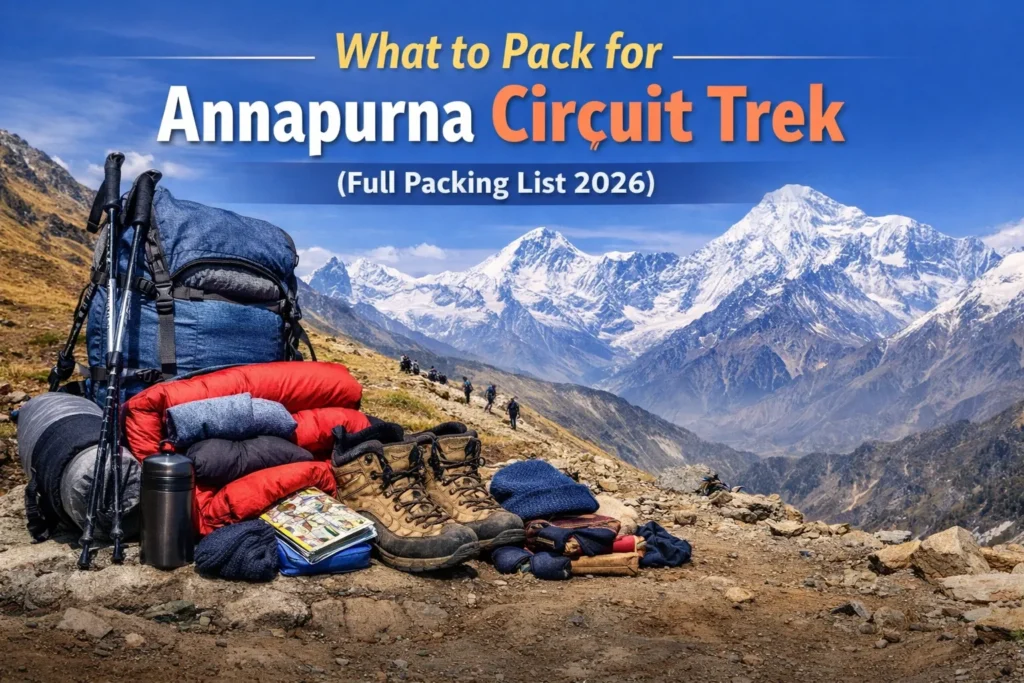
Packing for the Annapurna Circuit is not about carrying everything you own. It is about carrying the right things for cold mornings, strong sun, dusty trails, and high altitude.
The trail goes from warm river valleys to the windy top of Thorong La Pass at 5,416 meters. You will walk for 12 to 18 days in changing weather. If you pack too much, your backpack feels heavy and slows you down. If you pack too little, you may feel cold, wet, or uncomfortable.
This full packing list for 2026 explains what you really need, why you need it, and how to use it. By the end, you will know exactly what to put in your bag for the Annapurna Circuit Trek.
Why Packing Matters on the Annapurna Circuit
The Annapurna Circuit is one of the most famous long-distance treks in Nepal. It circles the Annapurna mountain range and passes through villages, forests, and high mountain desert. You will see places like Manang and Muktinath along the way.
Here is what makes packing important:
- The trek goes from about 800 meters to 5,416 meters.
- The weather changes quickly.
- Nights are cold at higher altitudes.
- You stay in teahouses, not hotels.
- You carry your own daypack, even if you hire a porter.
If you pack smart, you stay warm, dry, and safe. If you pack incorrectly, small problems can turn into big ones.
Clothing – Dress in Layers, Not in Bulk
Why Layers Are Important
In the mountains, mornings are cold, afternoons can be warm, and evenings get cold again. Instead of one thick jacket, you should wear it in layers. Layers let you add or remove clothing easily.
Think of it like this:
- Cold morning – wear 3 layers.
- Sunny afternoon – remove 1 or 2 layers.
- Windy pass – put them back on.
Base Layer – First Layer on Your Skin
This layer keeps your body dry.
Pack:
- 2 moisture-wicking t-shirts – synthetic or merino wool
- 1 thermal top
- 1 thermal bottom
Avoid cotton. Cotton holds sweat and makes you cold.
Mid Layer – Keeps You Warm
This layer traps heat.
Pack:
- 1 fleece jacket or pullover
- 1 lightweight down jacket
A good down jacket is very important above 3,500 meters. It gets cold in Manang and near Thorong La Pass, even in peak trekking seasons.
Outer Layer – Protects from Wind and Rain
The weather in the Annapurna region can change quickly.
Pack:
- 1 waterproof jacket with hood
- 1 waterproof pant
Make sure the jacket is windproof. Strong winds hit hard near the pass.
Trekking Pants and Daily Wear
You will walk 5 to 8 hours each day. Comfort matters.
Pack:
- 2 trekking pants – quick-dry fabric
- 1 pair of warm pants for evenings
- 3 to 4 underwear
- 3 to 4 pairs of trekking socks
- 1 warm hat
- 1 sun cap
- 1 pair of gloves – fleece or insulated
At high altitude, your fingers get cold quickly in the morning. Gloves are not optional.
Footwear – Your Most Important Gear
If your feet hurt, the trek becomes very hard.
Trekking Boots
Bring:
- Waterproof trekking boots with ankle support
Make sure:
- You have used them before
- They are already broken in
Do not bring brand-new boots to Nepal. You may get blisters.
Camp Shoes
Pack:
- Lightweight sandals or slippers
After walking all day, your feet need to relax.
Backpack and Storage
Main Backpack
If you carry your own bag:
- A 50 to 65-liter backpack is enough
If you hire a porter:
- 30 to 40 liter daypack for yourself
Rain Cover and Dry Bags
The weather can change fast in the Annapurna Conservation Area.
Pack:
- Backpack rain cover
- 2 to 3 dry bags for clothes and electronics
Even light rain can soak your clothes if not protected.
Sleeping Gear – Stay Warm at Night
Teahouses provide blankets, but they may not be enough in colder months.
Pack:
- Sleeping bag rated to -10°C to -15°C
- Sleeping bag liner
Even in October and November, nights in Manang and near Thorong La can drop below freezing.
You can rent sleeping bags in Kathmandu or Pokhara, but check the quality before renting.
Toiletries and Personal Care
Keep it simple and light.
Pack:
- Toothbrush and small toothpaste
- Small soap or body wash
- Quick-dry towel
- Wet wipes
- Toilet paper – carry your own
- Hand sanitizer
- Lip balm with SPF
- Sunscreen SPF 30 or higher
The sun at high altitude is strong. You can get sunburn even when it feels cool.
First Aid and Health Items
Medical help is limited in remote villages.
Pack:
- Personal medicines
- Basic first aid kit
- Pain relief tablets
- Band-aids and blister pads
- Rehydration salts
- Diamox – only if advised by your doctor
Altitude sickness is real. As you gain height above 3,000 meters, your body needs time to adjust. Go slow and drink enough water.
Trekking Accessories That Make a Big Difference
These small items help more than you think.
- Trekking poles – reduce pressure on knees
- Headlamp with extra batteries
- Reusable water bottles – 2 liters total
- Water purification tablets or a filter
- Sunglasses with UV protection
- Buff or neck gaiter
The trail from Manang to Thorong La Pass is dry and dusty. Sunglasses protect your eyes from wind and glare.
Electronics – Keep It Minimal
Electricity is available in most villages, but charging costs extra at higher altitudes.
Pack:
- Power bank
- Charging cables
- Universal adapter
- Camera or phone
Keep electronics in dry bags.
Documents and Money
You need:
- Passport
- TIMS Card
- Annapurna Conservation Area Permit
- Travel insurance copy
- Cash in Nepali rupees
ATMs are not reliable after certain points. Carry enough cash from Pokhara or Kathmandu.
What NOT to Pack
Do not bring:
- Heavy books
- Too many clothes
- Hair dryer
- Large shampoo bottles
- Extra shoes
Every extra kilogram makes your trek harder.
Seasonal Packing Adjustments for 2026
Spring – March to May
- Add light gloves
- Bring sun protection
- Trails can be dusty
Autumn – September to November
- Warm layers for cold mornings
- A down jacket is very important
Winter – December to February
- Extra thermal layers
- Heavier gloves
- Thick socks
Thorong La Pass may close during heavy snow in winter.
Common Questions About Packing for the Annapurna Circuit
1. What is the weight limit for the Annapurna Circuit?
If you hire a porter in Nepal, the standard limit is around 20 to 25 kg per porter. For personal comfort, keep your main bag under 12 to 15 kg.
2. Do I need a sleeping bag for the Annapurna Circuit?
Yes. Teahouses provide blankets, but they may not be enough at high altitude. A warm sleeping bag keeps you comfortable and safe.
3. Can I rent trekking gear in Nepal?
Yes. You can rent jackets, sleeping bags, and poles in Kathmandu and Pokhara. Check quality and warmth rating before renting.
4. Is a down jacket necessary?
Yes. Temperatures drop below freezing at higher altitudes, especially near Thorong La Pass.
Key Takeaways
- Use a layering system for clothing.
- A waterproof jacket and good boots are essential.
- Carry a warm sleeping bag.
- Keep your backpack light.
- Protect yourself from the sun and cold.
- Carry permits and enough cash.
- Do not overpack.
Final Advice Before You Pack for the Annapurna Circuit
The Annapurna Circuit is not just a walk. It is a journey through changing landscapes, cultures, and high mountain terrain. The trail takes you from green valleys to the windy top of Thorong La Pass. Good packing helps you enjoy the trek instead of worrying about cold nights or wet clothes.
Before you leave for Nepal, lay everything on the floor. Remove what you do not truly need. Test your boots. Check your jacket. Make sure your sleeping bag is warm enough.
If you prepare well, your focus stays on the mountains, the villages, and the experience. That is how you complete the Annapurna Circuit with confidence.
Now make your checklist, review your gear, and get ready for one of the most rewarding treks in Nepal.
Also Read >>> 10 Photography Tips for the Everest Base Camp Trek!