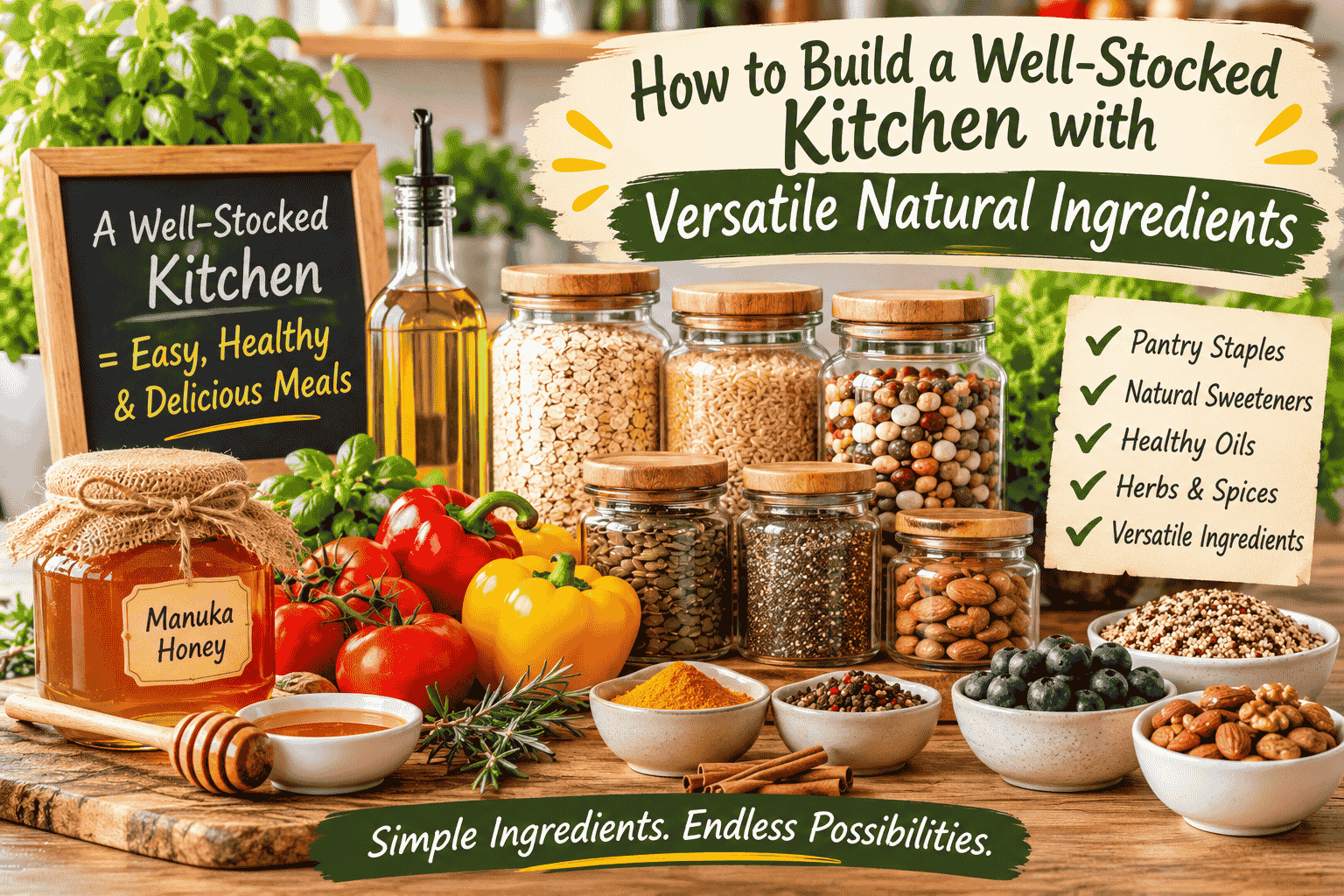
A well-stocked kitchen does not need dozens of specialty products or an overflowing pantry. In fact, preparing everyday meals becomes much easier when you have a collection of versatile ingredients that work across different recipes. From whole grains and fresh vegetables to nuts, spices, olive oil, and natural sweeteners, choosing the right pantry essentials can help you prepare satisfying meals without unnecessary shopping trips.
Natural ingredients also offer plenty of opportunities to experiment with flavors and cooking techniques. A few simple staples can become the foundation for breakfast, lunch, dinner, snacks, and homemade sauces. The key is to focus on ingredients that serve multiple purposes, store well, and complement different types of food.
Here are some practical ways to build a kitchen that supports convenient, flavorful, and balanced everyday cooking.
1. Start with Essential Pantry Staples
The foundation of a well-organized kitchen is a selection of ingredients you can use regularly. Instead of buying products for individual recipes, prioritize pantry staples that work in several dishes.
Whole Grains and Legumes
Whole grains such as brown rice, oats, quinoa, and whole-wheat flour are useful ingredients for everyday meals. They can be used in breakfast bowls, side dishes, salads, and homemade baked goods.
Legumes, including lentils, chickpeas, and beans, are equally valuable. They provide plant-based protein and dietary fiber and can be incorporated into soups, stews, salads, and curries.
Keeping a few different grains and legumes available makes it easier to prepare meals without relying on processed convenience foods.
Nuts and Seeds
Almonds, walnuts, chia seeds, pumpkin seeds, and sunflower seeds are convenient pantry additions.
They can be sprinkled over oatmeal, blended into smoothies, mixed into homemade granola, or added to salads for extra texture.
Choose plain or lightly seasoned varieties and store them in airtight containers to maintain freshness.
2. Keep Natural Sweeteners in Your Kitchen
Sweeteners are useful for more than desserts. They can balance acidic ingredients, improve homemade sauces, and add flavor to everyday meals.
Honey is a particularly versatile option because it works in both sweet and savory recipes.
For example, you can use a small amount in homemade salad dressings, yogurt bowls, marinades, tea, and baked goods.
Experiment with Homemade Hot Honey
If you enjoy combining sweet and spicy flavors, you can Make Hot Honey with Manuka Honey using only a few ingredients.
Combine half a cup of Manuka honey with one or two teaspoons of red pepper flakes in a small saucepan. Warm gently over low heat without boiling, then remove from the heat and allow the chili to infuse for approximately 10 minutes.
Strain the mixture if you prefer a smoother consistency and let it cool before transferring it to a clean, sealed container.
Homemade hot honey can be used as a finishing sauce for pizza, roasted vegetables, grilled chicken, sandwiches, and cheese platters.
It is a simple way to make one pantry ingredient more versatile.
3. Stock Up on Healthy Cooking Oils
Cooking oils play an important role in preparing everyday meals. They help transfer heat, improve texture, and bring out the flavors of different ingredients.
Olive oil is a useful kitchen staple for salad dressings, sautéing, roasting, and marinades.
Other options include avocado oil and canola oil, depending on the cooking temperature and recipe.
Choose Oils According to Their Purpose
Extra-virgin olive oil is particularly suitable for dressings, dips, and many everyday cooking applications. For higher-temperature cooking, choose an oil appropriate for the required heat level.
It is also worth paying attention to storage. Keep cooking oils tightly sealed in a cool, dark place to reduce exposure to heat, light, and air.
Having one or two suitable cooking oils is usually more practical than collecting numerous varieties that rarely get used.
4. Build a Practical Collection of Herbs and Spices
Herbs and spices can transform simple ingredients into flavorful meals without requiring complicated preparation.
A basic spice collection might include:
- Black pepper
- Cinnamon
- Turmeric
- Paprika
- Cumin
- Garlic powder
- Ginger
- Oregano
- Chili flakes
These ingredients can be used in soups, roasted vegetables, meat dishes, sauces, marinades, and homemade snacks.
Fresh herbs such as parsley, cilantro, basil, and rosemary are also useful additions. They provide freshness and can improve the flavor of meals just before serving.
Make Simple Seasoning Blends
Instead of purchasing several ready-made seasoning mixes, consider preparing your own combinations.
For example, mix paprika, garlic powder, black pepper, oregano, and a little salt to create a versatile seasoning for roasted vegetables or grilled chicken.
Store homemade spice blends in labeled airtight containers and keep them away from direct sunlight and moisture.
5. Choose Ingredients That Work Across Multiple Meals
One of the most effective ways to stock a kitchen is to choose ingredients that can be used in different meals throughout the week.
For example, plain Greek yogurt can serve as a breakfast ingredient, a smoothie base, a dip, or a substitute for sour cream in certain recipes.
Similarly, fresh lemons can be used in salad dressings, marinades, beverages, and vegetable dishes.
Build Around Versatile Ingredients
Consider keeping these ingredients available:
| Ingredient | Everyday Uses |
|---|---|
| Eggs | Breakfast, baking, sandwiches |
| Greek yogurt | Breakfast bowls, dips, sauces |
| Lemons | Dressings, marinades, drinks |
| Garlic | Soups, sauces, roasted vegetables |
| Tomatoes | Salads, pasta, soups |
| Oats | Porridge, baking, granola |
| Chickpeas | Curries, salads, hummus |
| Honey | Drinks, dressings, baking |
This approach helps reduce food waste because individual ingredients can be incorporated into several different recipes.
6. Include Fresh and Frozen Produce
Fresh fruits and vegetables are important parts of a well-stocked kitchen. However, keeping a variety of produce available throughout the week can sometimes be challenging.
Frozen vegetables and fruits offer a convenient alternative when fresh options are unavailable or difficult to use before they spoil.
Frozen peas, spinach, broccoli, berries, and mixed vegetables can be added to smoothies, soups, pasta dishes, and stir-fries.
Plan Produce Around Your Meals
Choose fruits and vegetables that can be used in more than one recipe.
For example, spinach can be added to omelets, smoothies, pasta, and salads. Bananas can be eaten fresh, blended into drinks, or used in homemade baking.
Planning meals around ingredients you already have is a practical way to manage grocery spending and minimize unnecessary waste.
7. Choose Quality Ingredients When Shopping
Building a well-stocked kitchen is not simply about purchasing more products. It is about understanding what you are buying and selecting ingredients that suit your cooking habits.
Read product labels, check ingredient lists, and compare packaging information before making purchasing decisions.
For products such as honey, consider the floral source, country of origin, processing information, and quality verification.
For example, people exploring manuka honey for sale should pay attention to product origin and MGO labeling. MGO, or methylglyoxal, is a naturally occurring compound commonly used to describe the concentration of this substance in Manuka honey.
A higher MGO rating indicates a higher measured concentration, but it does not automatically make a product the best choice for every cooking purpose.
Choose ingredients based on their intended use, flavor, quality, and value rather than marketing claims alone.
8. Organize Your Kitchen for Easy Access
Even a carefully selected collection of ingredients becomes less useful when everything is difficult to find.
Good kitchen organization helps you identify available ingredients, track expiration dates, and prepare meals more efficiently.
Use Airtight Containers
Transfer suitable dry goods such as rice, oats, lentils, flour, and nuts into clean, airtight containers.
Label each container with the ingredient name and, where helpful, its purchase or expiration date.
Follow the First-In, First-Out Method
Place older products toward the front of your pantry and newer purchases behind them. This encourages you to use ingredients before opening newer packages.
Keep frequently used ingredients within easy reach and store less commonly used products in designated spaces.
Refrigerate perishable ingredients according to their storage requirements, and avoid leaving foods at room temperature longer than recommended.
9. Create a Simple Weekly Restocking Routine
A well-stocked kitchen requires occasional planning, but the process does not need to be complicated.
Before grocery shopping, check your pantry, refrigerator, and freezer. Identify which staples are running low and which ingredients should be used soon.
Create a short shopping list based on your planned meals rather than buying items simply because they look appealing.
You can also prepare a few basic ingredients in advance, such as cooked grains, washed vegetables, boiled eggs, or homemade dressings.
These small steps can make weekday cooking faster and help you avoid unnecessary food purchases.
Conclusion
Building a well-stocked kitchen is about making thoughtful choices rather than filling every shelf with products. Versatile natural ingredients such as whole grains, legumes, nuts, fresh produce, herbs, spices, olive oil, and honey can support a wide range of everyday meals.
Focus on ingredients that offer multiple uses, store them properly, and organize your pantry so that everything is easy to access. Experiment with simple homemade recipes, including honey-based dressings and sauces, to bring variety to familiar dishes.
With a little planning and a practical selection of kitchen essentials, preparing flavorful, balanced meals can become a simpler and more enjoyable part of everyday life.