

So, how do you use Quora effectively to grow your online presence without crossing the line? Let’s break it down step by step.
Why Quora Matters for SEO
Before diving into strategies, it’s important to understand why Quora works so well for search engine optimization.
- High domain authority: Quora ranks quickly in Google for a huge range of keywords.
- User intent alignment: Questions on Quora reflect what real people are searching for.
- Long-tail opportunities: Many Quora questions match long-tail queries that are easier to rank for.
- Content discovery: Google frequently pulls Quora answers into featured snippets.
In short, Quora is both a traffic source and a keyword research goldmine.
Step 1: Build a Trustworthy Profile
The first thing users (and Quora’s moderation team) notice is your profile. A strong profile boosts credibility and trust.
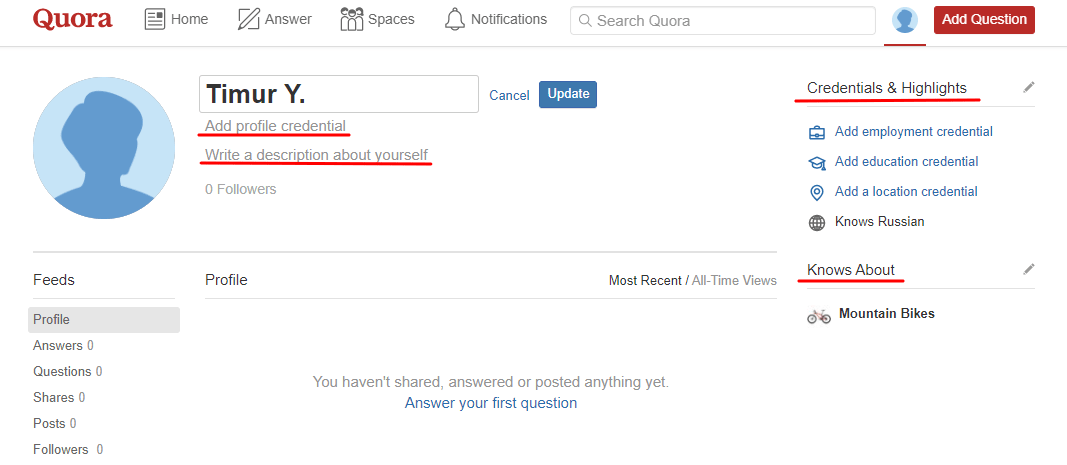
Checklist for a good profile:
- Use your real name and a clear professional photo.
- Write an About Me section highlighting expertise and experience.
- Add links to your LinkedIn, website, or portfolio.
- Select 3–5 topics that align with your niche.
When readers see you as a genuine expert, they’re more likely to follow you and upvote your answers.
Step 2: Focus on Quality, Not Quantity
Posting 10 short answers a day won’t help. In fact, it might hurt. Quora prioritizes answers that provide value.
Best practices:
- Post only 1–2 high-quality answers per day.
- Aim for 300+ words per answer.
- Use data, examples, or real-life insights to stand out.
- Stay consistent with posting, even if it’s just a few times a week.
Remember: Quora is a marathon, not a sprint.
Step 3: Choose the Right Questions
Not every question is worth your time. The key is to find questions where your expertise can shine and your answer will be seen.
How to pick smart questions:
- Look for questions with 500+ views but few good answers.
- Use Quora’s Trending section and topic feeds for ideas.
- Stick to topics where you have first-hand expertise.
- Prefer questions with lots of followers for better reach.

Use Google search with:
site:quora.com [your keyword]
- Example: site:quora.com “best SEO tools for small businesses”
This helps you find real user queries that match your content goals.
Step 4: Write Answers That Stand Out
Quora is crowded, so your answers need to hook readers quickly.
How to write engaging answers:
- Start with a hook (a question, stat, or short story).
- Use clear formatting with headings, bullet points, and short paragraphs.
- Share unique insights instead of generic advice.
- End with a subtle call to action (e.g., “Check my profile for more resources”).
Pro tip: Stick to a 90/10 ratio: 90% helpful content, 10% subtle promotion.
Step 5: Be Careful With Links
Dropping links everywhere is the fastest way to get banned. Quora is strict about spammy promotions.
Do this instead:
- Avoid direct links in answers.
- Use CTAs like “See my profile for detailed resources”.
- Share links in Quora Spaces rather than in answers.
- Build trust first, then guide users to your content naturally.
Step 6: Leverage Quora Spaces
Spaces are Quora’s version of niche communities. They’re perfect for safe content promotion.
- Create a Space around your industry or expertise.
- Share curated resources, articles, and discussions.
- Cross-promote your blog or business content inside your Space.
- Engage with followers to build a loyal audience.
Unlike answers, Spaces allow more freedom to share links and promotional content without penalties.
Step 7: Engage Beyond Just Answering
Quora isn’t only about answers; it’s about conversations. By engaging more, you become visible to a wider audience.
- Comment on other answers with genuine insights.
- Upvote quality answers in your niche.
- Follow experts and interact with their content.
- Share useful posts from others, not just your own.
This builds trust and makes you part of the community instead of just a self-promoter.
Step 8: Track Performance With Analytics
To make the most of Quora, monitor what works.
- Use Quora Analytics to see which answers drive the most views and upvotes.
- Double down on high-performing topics.
- Keep an eye on moderation alerts to stay safe.
- Scale activity slowly, start small, then grow as your profile gains credibility.
Quick Answers to Common Questions
Is Quora good for SEO?
Yes. Quora answers often rank in Google, provide backlinks, and help drive relevant traffic to your website.
Can I add links in Quora answers?
You can, but be careful. Too many direct links can get flagged as spam. It’s better to guide readers to your profile or use Quora Spaces.
How many answers should I post daily?
1–2 detailed answers per day is safe. Posting more can trigger spam filters.
How do I find the best questions to answer?
Use Quora’s trending feeds, or search on Google with site:quora.com + [keyword] to discover active, relevant questions.
FAQ Section
- How can I use Quora for SEO without being banned?
Post helpful, in-depth answers with minimal self-promotion. Avoid spamming links. Use Quora Spaces for safe sharing and build a strong, trustworthy profile before promoting content. - Does Quora allow backlinks?
Quora allows links, but they must add value. Irrelevant or promotional links get flagged. A better approach is guiding readers to your profile or Quora Space. - What is the best answer length on Quora?
Answers between 300–500 words perform best. They’re long enough to be valuable but short enough to hold attention. Include examples, stats, or stories to increase engagement. - Can Quora help with long-tail keyword targeting?
Yes. Many Quora questions directly match long-tail searches. Answering them increases your chances of ranking in Google and attracting highly targeted traffic. - Is Quora better for traffic or branding?
It works for both. Quora builds authority and trust, while also sending niche traffic to your website when used strategically.
Final Thoughts
Quora is one of the smartest platforms to combine community engagement with SEO growth. If you treat it like a place to genuinely share knowledge rather than just promote yourself, you’ll not only avoid bans but also build long-term visibility.
By creating a professional profile, answering the right questions, writing with clarity, and using Quora Spaces wisely, you can turn Quora into a consistent traffic source while staying in good standing with moderation.