Introduction
A Learner Licence is the starting point for anyone preparing to drive independently in Tasmania. For a first-time driver, the process can seem complicated because there is more to learn than simply controlling a vehicle. Understanding road rules, building practical experience, developing hazard awareness, and preparing for future licensing stages all form part of the journey.
For professionals, learning to drive can have an even greater practical purpose. A licence may make it easier to commute, attend meetings, visit customers, travel between work locations, or access employment opportunities across Tasmania. The challenge is finding a learning approach that fits around existing responsibilities. Combining supervised practice with professional driving lessons and structured driver training can make the process more organised and productive.

What Is a Learner Licence and Why Is It Important?
A Learner Licence allows a new driver to begin developing practical driving experience under the required supervision. It is not simply a document that permits someone to practise. It represents the beginning of a structured learning period where road knowledge needs to be converted into safe driving behaviour.
New drivers should become familiar with important Tasmanian road rules before spending significant time behind the wheel. These include speed limits, traffic signs, giving-way rules, intersections, lane markings, parking requirements, and safe following distances.
Understanding the reason behind these rules is more useful than memorising answers. When learners understand why a particular action is required, they are more likely to apply it correctly when faced with an unfamiliar road situation.
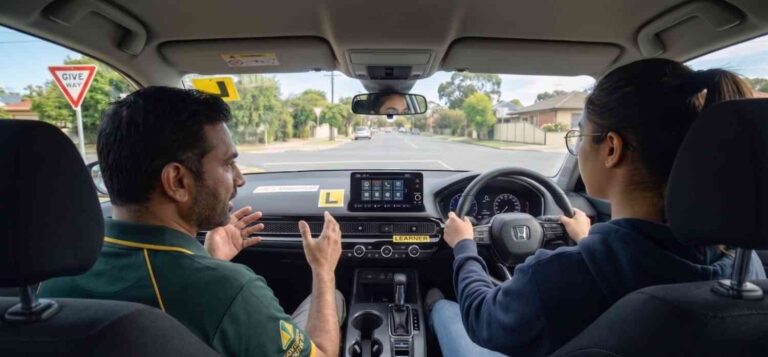
A professional driving school can help bridge the gap between theory and practical driving. An instructor can demonstrate how road rules apply at intersections, roundabouts, pedestrian crossings, and other everyday locations.
How Can New Drivers Prepare for Practical Driving?
Once a Learner Licence has been obtained, consistent practice becomes an important part of developing confidence. However, effective practice is about more than simply spending hours behind the wheel.
Learners should gradually experience different driving environments. Quiet residential streets can provide an opportunity to develop basic vehicle control, while busier roads can introduce more complex situations. As confidence improves, learners can practise intersections, lane changes, roundabouts, parking, traffic lights, and unfamiliar routes.
Professional driving lessons can make this process more effective. An instructor can identify weaknesses that a learner may not notice independently. For example, a learner may believe their mirror checks are sufficient while an instructor notices that they are too late or inconsistent. Correcting such habits early can prevent them from becoming established.
Structured driver training can also help learners understand how to anticipate hazards rather than simply react to them. Looking further ahead, recognising developing traffic situations, and adjusting speed early are important skills for safe independent driving.
Why Are Driving Lessons Useful for Professionals?
For working adults, learning to drive often has a clear practical objective. A Learner Licence may be the first step towards greater independence in commuting and workplace travel. Professionals may eventually need to drive to offices, customer locations, construction sites, appointments, or other destinations that are not easily accessible by public transport.
This makes practical confidence particularly important.
Professional driving lessons can help learners experience situations that are relevant to their future driving needs. For example, someone who expects to commute during busy periods can benefit from practising in heavier traffic. Someone who regularly visits unfamiliar locations can develop confidence with navigation and changing road conditions.
Another advantage is efficiency. Professionals may not have several hours available every week for unstructured practice. Focused driver training allows them to work on specific weaknesses and make better use of the time they have available.
A reputable driving school can also help learners progress gradually. Instead of immediately introducing difficult situations, instructors can build skills step by step and increase the level of challenge as confidence develops.
What Should Learners Focus on After Getting Their Licence?
Getting a Learner Licence is only the beginning of the practical learning process. New drivers should use their supervised driving experience to develop reliable habits rather than simply trying to accumulate experience without direction.
Observation should remain a major priority. Learners should regularly check mirrors, monitor surrounding traffic, watch for pedestrians and cyclists, and look far enough ahead to identify potential hazards. Good observation gives drivers more time to respond safely.
Vehicle control is another important area. Smooth acceleration, controlled braking, accurate steering, appropriate speed, and correct lane positioning all contribute to safer driving.
Learners should also experience different road environments throughout Tasmania. Driving on familiar streets can build confidence, but independent drivers eventually need to handle unfamiliar roads and changing traffic conditions. Exposure to different situations helps improve adaptability.
Regular driving lessons can be useful even after a learner has gained reasonable confidence. An instructor can provide an objective assessment of progress and identify areas that may require additional attention before the learner moves towards the next stage of licensing.
How Can Learners Balance Driving Practice With Work?
Professionals often struggle with one simple problem: finding enough time. The solution is usually consistency rather than trying to complete large amounts of practice in a short period.
A realistic schedule can include regular driving lessons combined with supervised practice when time is available. Each session should have a clear purpose. One session might focus on parking and low-speed control, while another could concentrate on intersections, lane changes, or hazard awareness.
Keeping track of progress can also help. If a learner repeatedly struggles with the same situation, additional instruction can be arranged specifically for that skill.
This approach makes the Learner Licence period more structured and reduces the risk of spending valuable practice time repeating skills that have already been mastered.
Conclusion
A Learner Licence is the foundation for developing safe and confident independent driving skills in Tasmania. The most effective approach combines knowledge of road rules, consistent supervised practice, professional driving lessons, and targeted driver training.
For professionals, the benefits extend beyond simply obtaining a licence. Strong driving skills can make commuting easier, support workplace travel, improve confidence on unfamiliar roads, and provide greater independence across Tasmania.
Rather than viewing the learning process as a series of requirements to complete, new drivers should treat every practice session as an opportunity to build better judgement, stronger observation, and safer driving habits. With the right guidance and consistent practice, the journey from learner to independent driver can become much more manageable and rewarding.