
A true Kani shawl is one of the most treasured textiles of Kashmir. Each piece is woven with small wooden sticks called “kanis,” making the process slow and detailed. When you touch or wear a real one, you can feel the effort and skill behind it. But with growing demand, many loom-made versions look similar at first glance. This makes it important to know the difference, especially when buying an authentic handmade kani stole or a kani pashmina stole.
If you’ve ever wondered why some Kani shawls cost much more than others, or what makes a real one so special, this guide will help you see what sets them apart.
The History Behind the Kani Weave
To understand the difference, it helps to know where the Kani technique began. Kani weaving comes from the small villages of Kashmir, where artisans have practiced it for generations. It was once made only for kings and noble families, and the skill was passed down through families.
- Kani weaving is one of the oldest crafts of Kashmir.
- Each shawl has a story that reflects nature, flowers, or old patterns.
- Artisans spend years learning how to use tiny wooden sticks for weaving.
- This craft is slow and steady, which makes every piece special.
How a Real Handwoven Kani Shawl Is Made
A true Kani shawl is made entirely by hand. Instead of long threads or machines, artisans use small colored bobbins. Each bobbin carries a thread that fits into the design like a puzzle. A single shawl can have hundreds of these bobbins.
- Every color is woven separately using hand movements.
- The design is followed on paper, called a “Talim,” which guides each thread.
- Creating one shawl can take months or even years.
- The result is smooth, light, and full of fine details.
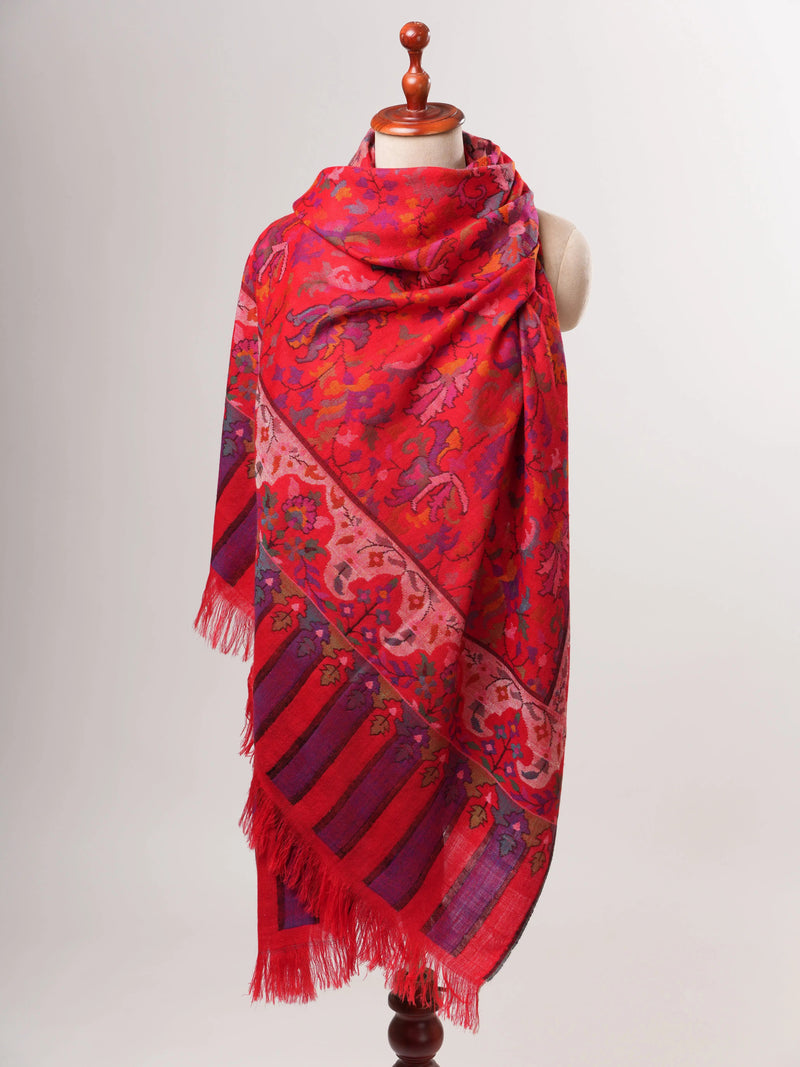
What Happens in a Loom Copy
Loom copies are made on mechanical looms that follow pre-set patterns. While they look similar from a distance, they lack the depth and softness of handmade work. These pieces are fast to produce, which is why they cost less.
- Machines repeat designs quickly.
- Patterns look flat and lack the natural flow of handwoven art.
- The fabric feels thicker or heavier.
- Colors appear uniform instead of naturally blending.
Texture Differences Between Handwoven and Loom-Made
The easiest way to compare both types is by feeling the fabric. A genuine Kani pashmina shawl feels soft and warm. Loom-made versions feel more like standard wool shawls.
- A real shawl has a smooth, light texture.
- Handwoven pieces feel soft against the skin.
- Loom copies can feel rough or stiff.
- Real Kani shawls drape naturally and softly.
Checking the Back Side of the Shawl
One quick trick to identify a handwoven shawl is to flip it over. The back of a real shawl shows a clean pattern, almost like the front. Loom copies reveal threads running across the back because machines cannot hide them.
- You won’t see long, loose threads on an authentic piece.
- The back looks organized with neat color switches.
- Loom-made shawls show knots or thread jumps.
- The reverse side of a real shawl never looks messy.
Time Taken to Make Each Type
The time difference between both types tells you why one costs more. A handmade Kani piece takes months. A mechanical version takes only a few days.
- Handwoven production is slow because every detail is manual.
- Artisans work hours each day to keep the design uniform.
- Loom copies follow a speedy mechanical rhythm.
- More time means more detail in every part of the handwoven shawl.
Design Depth and Pattern Quality
In a real Kani shawl, the design looks alive because each thread is placed with care. Loom-made designs appear flat because machines do not weave thread by thread—they follow preset designs.
- Handwoven designs show fine curves and natural flow.
- Motifs look clear, detailed, and beautifully placed.
- Loom copies may look blurry when seen up close.
- Colors in genuine shawls blend slowly and smoothly.
Weight Difference in Both Types
A real Kashmiri kani shawl is surprisingly light. Even with heavy designs, it stays soft and airy because pashmina is naturally light. Machine-made shawls feel heavier because they use thicker yarns.
- Original pieces weigh less and feel easier to carry.
- Loom-made ones feel bulkier around the shoulders.
- Real shawls feel warm without being heavy.
- Weight is a good hint when checking authenticity.
Price Difference and Why It Matters
Many buyers wonder why handmade Kani shawls are priced much higher. The reason is simple—the time, effort, and skill involved. When you buy a handwoven Kani piece, you support artisans who work for months to finish one shawl.
- Handmade pieces reflect true craftsmanship.
- Machine-made shawls cost less because they require less work.
- Authentic pieces have long-term value.
- Choosing handmade supports local Kashmiri weavers.
Why Handmade Kani Shawls Last Longer
Handwoven shawls are tightly woven, thread by thread, which makes them stronger. Loom copies may loosen or fuzz over time. A real Kani piece can last for decades when cared for properly.
- Original shawls stay smooth for many years.
- They do not lose shape or softness.
- Loom copies may become rough after repeated use.
- Real pieces hold color and pattern for a long time.
Cultural and Emotional Value
Beyond quality and texture, a handmade Kani shawl carries emotional value. It holds the work of an artisan who dedicated months of life to bring a design to reality. Something made by hand always feels more meaningful than something produced by a machine.
- It carries the touch and time of the artisan.
- Each shawl has a unique identity.
- Handmade items connect you to culture and history.
- Loom copies cannot capture this sense of human craft.
Why Buyers Should Know the Difference
Buying a shawl without knowing the difference may lead you to pay more for a machine-made version. Understanding these signs helps you make the right choice, especially when investing in a handmade kani stole or a kani pashmina stole.
- Helps avoid buying imitations at high prices.
- Lets you appreciate true craftsmanship.
- Helps keep traditional weaving alive.
- Builds awareness about fair work and fair prices.
Conclusion
A handmade Kani piece stands apart from any loom-made version. The softness, the clean back, the fine weaving, the light feel, and the months of work all make it special. Every time you choose a real kani pashmina shawl or a fine piece from Kashmir, you support the hands that keep this craft alive. For those who want original pieces made with care, brands like Shahkaar offer collections that reflect the true beauty of a kani shawl and the deep skill behind Kashmiri weaving.