
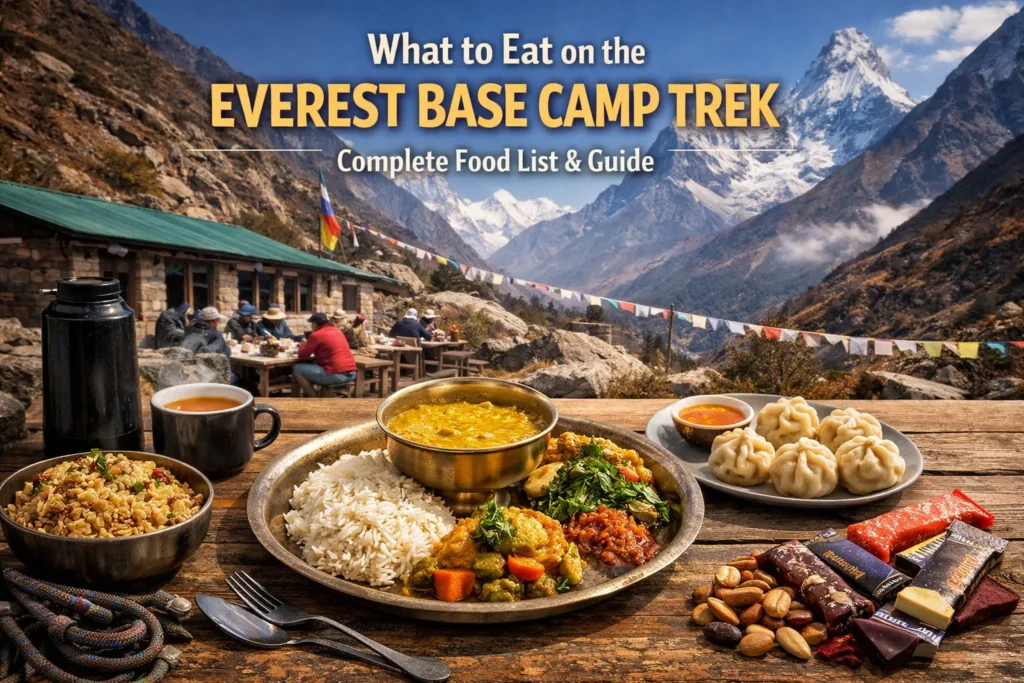
Food plays a very important role during the Everest Base Camp trek. The trek usually takes 12 to 16 days and reaches high altitude, where your body burns more calories than usual. Many trekkers focus on packing gear, but food is just as important for staying strong, warm, and healthy.
Here we explain what food is available on the Everest Base Camp route, what meals you can expect in teahouses, how prices change with altitude, and which foods help your body adjust to high elevation. You will also find out what snacks to carry, what drinks are safe, and how to avoid stomach problems while trekking.
By the end of this guide, you will know exactly what to eat each day so your body has enough energy to walk long distances in the Himalayas.
Why the Right Food is Important on the Everest Base Camp Trek
The Everest Base Camp trek is not a simple hike. Each day you walk 5 to 7 hours, often uphill, while breathing thinner air. At high altitude, your body uses more energy to stay warm and to keep moving. Because of this, trekkers burn around 3,000 to 5,000 calories per day.
If you do not eat enough, you may feel tired, weak, and unable to continue walking comfortably. Good food helps in three important ways.
– First, it gives your muscles the energy they need for long trekking days.
– Second, it helps your body adjust to altitude. Eating enough carbohydrates helps oxygen move through the body more efficiently.
– Third, warm meals help your body stay warm in cold mountain temperatures.
The good news is that food is available in almost every village along the Everest Base Camp route. Small mountain lodges called teahouses serve meals to trekkers throughout the journey.
How Food Works on the Everest Base Camp Route
Most trekkers eat all their meals inside teahouses. These are small family-run lodges where trekkers sleep, eat, and rest.
The kitchens are simple, but they serve a surprisingly wide range of meals. Menus are often similar from village to village because food supplies are transported by porters, yaks, or small aircraft.
Most teahouses offer three main meals:
Breakfast
Usually served early in the morning before trekking.
Lunch
Often eaten at a village along the trail.
Dinner
The main meal of the day after arriving at the lodge.
Food prices increase as you go higher on the mountain. This happens because all supplies must be carried by people or animals. A meal that costs $5 in the lower villages might cost $10 to $15 near base camp.
Typical Food and Drink Options on the Everest Base Camp Trek
| Food Category | Common Items Available | When Trekkers Usually Eat It | Energy / Health Benefit | Availability on the Trek |
| Traditional Nepali Meal | Dal bhat (rice, lentil soup, vegetables, pickles) | Mostly dinner or lunch | High carbohydrates and protein – provide long-lasting energy for trekking | Available in almost every teahouse from Lukla to Gorak Shep |
| Breakfast Foods | Porridge, pancakes, eggs, toast, Tibetan bread, muesli | Early morning, before starting the trek | Provides steady morning energy and keeps you full for several hours | Available in all trekking lodges |
| Rice and Noodle Dishes | Fried rice, vegetable noodles, noodle soup | Lunch or dinner during the trek | Easy to digest and rich in carbohydrates, which helps at high altitude | Available in most villages along the trail |
| Potato Dishes | Boiled potatoes, fried potatoes, and potato curry | Lunch or dinner | Potatoes provide slow-release energy, which helps during long hiking days | Common in villages like Namche Bazaar and Dingboche |
| Local Snacks | Momos (dumplings), Tibetan bread, soup | Afternoon snack or light dinner | Provides quick calories and helps warm the body in cold weather | Available in many teahouses |
| Trekking Snacks | Chocolate, energy bars, nuts, dried fruit | While trekking between villages | Quick energy boost during steep climbs and long walks | Usually brought by trekkers or purchased in larger villages |
| Hot Drinks | Black tea, ginger tea, lemon tea, coffee, and hot chocolate | Breakfast, evening, or rest stops | Helps maintain hydration and keeps the body warm in cold mountain temperatures | Available throughout the Everest region |
| Hydration Options | Boiled water, filtered water, electrolyte drinks | Throughout the day | Prevents dehydration, which is common at high altitude | Water is available everywhere, but treatment is recommended |
The Most Popular Food on the Everest Base Camp Trek
While many dishes are available, some foods appear on almost every menu. These meals are filling, warm, and good for high-altitude trekking.
Dal Bhat – The Energy Meal of the Himalayas
Dal bhat is the most famous trekking meal in Nepal.
It includes:
- Rice
- Lentil soup
- Vegetable curry
- Pickles or greens
Many trekkers eat dal bhat every day because it provides a balanced meal with carbohydrates, protein, and vegetables.
One special thing about dal bhat is that many teahouses offer free refills. That means you can eat more rice or lentils if you are still hungry. This is very helpful after a long trekking day.
Dal bhat is also freshly cooked, which makes it one of the safest foods to eat on the trail.
Fried Rice
Fried rice is another common meal on the trek. It is simple but filling.
It usually contains rice mixed with vegetables, egg, or sometimes chicken. The meal provides quick energy and is easy to digest.
Many trekkers choose fried rice for lunch because it is not too heavy but still gives enough energy to keep walking.
Noodles and Pasta
Noodle soups and pasta dishes are also common in teahouses.
Popular options include:
- Vegetable noodles
- Garlic noodle soup
- Spaghetti with tomato sauce
- Macaroni with cheese
Noodle soups are especially good at high altitude because warm liquids help with hydration.
Potatoes – A Local Favorite
Potatoes grow well in the Everest region and are used in many meals.
You will often find:
- Boiled potatoes
- Fried potatoes
- Potato pancakes
- Potato curry
Potatoes are rich in carbohydrates and help provide steady energy for trekking.
Momos (Nepali Dumplings)
Momos are a favorite snack or dinner meal in Nepal.
They are dumplings filled with vegetables or meat and served with spicy sauce. Many trekkers love momos because they are tasty and filling after a long day of hiking.
What Trekkers Usually Eat for Breakfast
Breakfast is important because you start trekking soon after eating. The goal is to eat food that provides energy but is not too heavy.
Common breakfast foods include:
- Porridge
- Pancakes
- Toast with jam or honey
- Tibetan bread
- Muesli with milk
Porridge is one of the best breakfast choices because it releases energy slowly. This helps keep you full during the morning hike.
Hot drinks are also common at breakfast. Tea and coffee help warm the body before starting the trek.
Best Foods for High Altitude Energy
At high altitude, your body works harder to function normally. Because of this, some foods are better than others.
Trekkers often feel better when they eat meals that are rich in carbohydrates. Carbohydrates help your body produce energy using less oxygen.
Foods that work well at altitude include:
- Rice
- Potatoes
- Pasta
- Oats
- Bread
Heavy foods that contain too much fat can sometimes make trekkers feel slow or uncomfortable. For this reason, many experienced trekkers choose lighter meals with more carbohydrates.
Snacks to Carry During the Trek
Even though meals are available in villages, many trekkers like to carry snacks while walking.
Snacks help keep your energy steady between meals.
Good trekking snacks include:
- Energy bars
- Chocolate
- Nuts
- Dried fruits
- Trail mix
- Peanut butter packets
Many trekkers bring snacks from home because they are cheaper than buying them on the mountain.
Chocolate bars that cost $1 in the city might cost $4 or $5 higher up the trail.
Drinks Available on the Everest Base Camp Trek
Staying hydrated is very important during the trek. Dry mountain air and long hiking days can cause dehydration quickly.
Teahouses offer many drinks.
Common drinks include:
- Black tea
- Ginger tea
- Lemon tea
- Milk tea
- Coffee
- Hot chocolate
Garlic soup is also popular among trekkers. Many people believe it helps with altitude adaptation.
Cold drinks like soda are available, but they become expensive in higher villages.
Food Prices on the Everest Base Camp Trek
Food becomes more expensive as you go higher on the trail.
This happens because supplies are carried by porters or animals for many days.
Average food prices may look like this:
Lower villages – $4 to $6 per meal
Mid altitude villages – $6 to $10 per meal
High altitude villages – $10 to $15 per meal
Hot drinks may cost $2 to $5, depending on altitude.
Even though prices are higher, the money helps support local families who run teahouses along the trekking route.
How to Avoid Stomach Problems on the Trek
Stomach issues can ruin a trekking trip. Fortunately, most problems can be avoided with a few simple habits.
Always choose freshly cooked meals rather than food that has been sitting for a long time.
Drink only boiled or treated water.
Wash your hands before meals whenever possible.
Avoid raw vegetables or salads because they may be washed in untreated water.
Many trekkers also carry hand sanitizer for use before eating.
What to Eat Each Day on the Trek – A Simple Example
Many trekkers like to follow a simple eating routine during the trek.
A typical day might look like this.
Breakfast
Porridge with tea or coffee.
Mid-morning snack
Energy bar or nuts while walking.
Lunch
Fried rice or noodle soup in a village.
Afternoon snack
Chocolate or dried fruit.
Dinner
Dal bhat with vegetables and tea.
This pattern keeps energy steady throughout the day.
Do You Need to Bring Your Own Food for the Trek?
Most trekkers do not need to carry large amounts of food. Teahouses provide full meals throughout the trek.
However, it is still a good idea to bring some personal snacks. Snacks are helpful during long walking sections between villages.
Many trekkers also bring electrolyte drink powder to mix with water.
This helps replace minerals lost through sweat and keeps the body hydrated.
What Do Sherpas and Local Guides Eat During the Trek?
Local guides and porters often eat dal bhat twice a day.
Dal bhat provides steady energy and is affordable. Because it includes rice, lentils, and vegetables, it offers a balanced diet for physically demanding work.
Many guides say the phrase:
“Dal bhat power, 24 hours.”
It is a common joke among trekkers, but it also shows how important this meal is for energy in the mountains.
Key Takeaways
- The Everest Base Camp trek requires a lot of energy, so eating well is essential.
- Most trekkers rely on meals provided by teahouses along the trail. Dal bhat is the most common and reliable food because it is fresh, filling, and balanced.
- Carbohydrate-rich meals such as rice, pasta, potatoes, and porridge help the body function better at high altitude.
- Snacks like nuts, chocolate, and energy bars help maintain energy between meals.
- Vegetarian food is usually the safest choice at higher elevations, and drinking boiled or treated water helps prevent stomach problems.
- When you plan your meals properly, your body will feel stronger, warmer, and more comfortable throughout the trek.
Eating Smart Makes the Trek Easier
The Everest Base Camp trek is one of the most rewarding adventures in the world. But reaching base camp requires strength, patience, and the right fuel for your body.
Food on the trail may be simple, but it is designed to give trekkers steady energy in high mountain conditions. When you choose meals that are warm, fresh, and rich in carbohydrates, your body adapts better to altitude, and long trekking days become easier.
Before starting the trek, plan your snacks, understand what meals are available, and prepare your body to eat regularly even when you feel tired.
If you treat food as an important part of your trekking strategy, you will enjoy the journey more and reach Everest Base Camp feeling strong and energized.
Also Read:
>>> 10 Photography Tips for the Everest Base Camp Trek!
>>> What to Pack for Annapurna Circuit Trek (Full Packing List 2026)
Written By: Nepal Hiking Team