
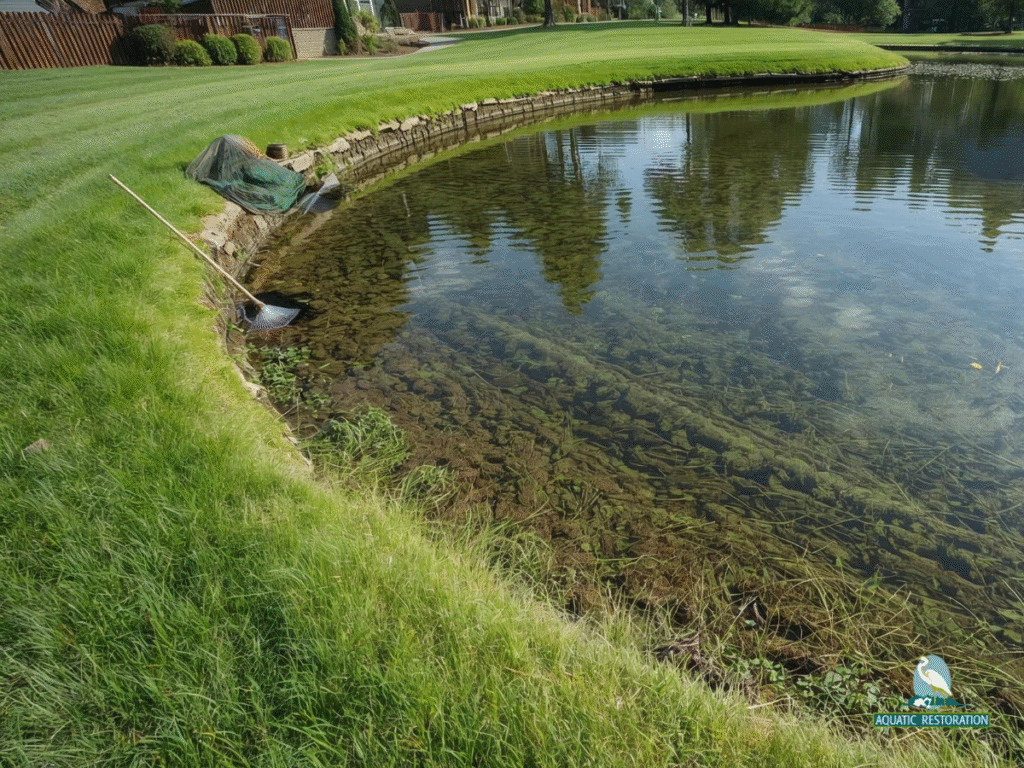
Retention ponds, sometimes called stormwater ponds, are essential parts of our communities in Madison, Georgia. They help manage rainwater, prevent flooding, and improve water quality by capturing pollutants before they reach rivers, lakes, or groundwater. But like any man-made feature, retention ponds need care to keep functioning properly. One of the most common questions for property managers, homeowners associations, and local businesses is: how often should a retention pond be cleaned?
In this guide, we will explain retention pond maintenance in Madison, GA in detail, step by step, in simple language. Even if you are new to the topic, by the end of this article, you’ll understand why cleaning is essential, how often it should be done, and what you can do to keep your pond healthy.
What is a Retention Pond?
Before diving into cleaning schedules, let’s quickly understand what a retention pond is.
A retention pond is a man-made pond designed to hold stormwater runoff. When it rains, water flows into the pond from streets, parking lots, and lawns. The pond temporarily stores the water and slowly releases it over time, preventing flooding downstream.
Retention ponds are also natural filters. Sediment, trash, and pollutants like fertilizers or oil from roads settle at the bottom of the pond, reducing pollution in rivers and lakes. Over time, though, this sediment can build up, which is why cleaning and maintenance are crucial.
Why Retention Pond Maintenance in Madison, GA is Important
Even though ponds may look like natural lakes, they are engineered structures that require care. Without proper maintenance, retention ponds can face problems such as:
- Sediment buildup: Mud, sand, and silt accumulate over time, reducing the pond’s capacity to store stormwater.
- Algae growth: Excess nutrients from fertilizers can cause algae blooms, making water green, smelly, and unhealthy.
- Erosion: Banks and slopes can erode, weakening the structure and causing costly damage.
- Trash accumulation: Stormwater carries litter and debris into the pond, which can block drains or create health hazards.
- Mosquito breeding: Stagnant water can become a mosquito breeding ground, increasing local health risks.
Regular retention pond maintenance in Georgia ensures that the pond continues to perform its job efficiently, prevents safety hazards, and keeps the surrounding environment healthy.
How Often Should a Retention Pond Be Cleaned?
The frequency of cleaning depends on several factors: the size of the pond, the amount of rainfall, surrounding land use, and the type of sediment and debris that enters the pond. Here’s a simple breakdown:
1. Routine Inspections – Every 3 to 6 Months
Even if your pond looks fine, routine inspections are critical. During inspections, check for:
- Trash or debris
- Erosion on the banks
- Excessive algae growth
- Signs of sediment buildup near the inlet or outlet
Regular inspections help you catch small problems before they become big and expensive.
2. Sediment Removal – Every 3 to 5 Years
Sediment slowly settles at the bottom of the pond. If it’s not removed, it reduces water storage capacity and may cause overflow during heavy rains. Most retention ponds in Madison, GA should have sediment removed every 3 to 5 years, depending on the surrounding land and rainfall patterns.
3. Vegetation Management – Annually
Grass, plants, and trees around the pond help reduce erosion and filter pollutants. However, overgrown vegetation can block water flow or damage the pond’s structure. Trimming and removing unwanted plants once a year is usually sufficient.
4. Algae Control – As Needed
Algae growth depends on nutrient levels in the water, sunlight, and temperature. In Georgia’s warm climate, algae may appear quickly in summer. Regular monitoring and treatment, if necessary, keeps algae under control.
5. Emergency Cleanings – After Heavy Storms
Severe storms can wash in large amounts of debris or sediment. After major weather events, check your pond and remove any blockages or floating debris immediately.
Steps to Clean a Retention Pond
Cleaning a retention pond may sound complicated, but it can be broken down into manageable steps. Here’s a simplified approach:
- Inspect the Pond: Walk around the pond and take note of debris, sediment, or erosion. Check the inlet and outlet pipes.
- Remove Floating Debris: Use nets, rakes, or specialized equipment to remove trash, branches, and leaves from the water surface.
- Dredge Sediment: Sediment at the bottom of the pond may need heavy equipment like a small excavator. For smaller ponds, manual removal is possible but labor-intensive.
- Control Vegetation: Trim overgrown grass, shrubs, or trees around the pond. Remove invasive plants or weeds.
- Check and Repair Structures: Look at the pond’s embankments, spillways, and outlet structures. Repair any erosion, cracks, or damage to prevent future problems.
- Manage Algae: If algae are present, treatments like aeration, barley straw, or safe chemical treatments may be needed.
Retention Pond Maintenance Tips
To keep your pond healthy year-round, here are some tips specific to Madison, GA:
- Plant Native Vegetation: Native plants reduce erosion and naturally filter pollutants.
- Install Trash Barriers: Simple barriers at inlets can prevent litter from entering the pond.
- Monitor After Storms: Heavy rains can deposit unexpected debris or sediment. A quick check after storms helps prevent problems.
- Hire Professionals: Some tasks, like dredging or algae treatments, may require licensed pond management services in Georgia.
FAQs About Retention Pond Cleaning
Q1: How do I know if my retention pond needs cleaning?
Answer: Look for signs like sediment buildup, algae growth, stagnant water, flooding during rain, or clogged inlets and outlets. Regular inspections every 3–6 months help identify these issues early.
Q2: Can I clean a retention pond myself?
Answer: Small debris removal and trimming vegetation can be done yourself. However, sediment dredging and structural repairs should be handled by professionals for safety and efficiency.
Q3: How much does retention pond cleaning cost in Madison, GA?
Answer: Costs vary depending on the pond size, sediment level, and equipment needed. Routine maintenance is generally more affordable than emergency cleaning after neglect.
Q4: How can I prevent my retention pond from getting dirty?
Answer: Use vegetation to filter runoff, install trash barriers, reduce fertilizer use nearby, and schedule regular inspections and cleanings.
Common Mistakes to Avoid
Even with regular maintenance, some mistakes can reduce the effectiveness of a retention pond:
- Ignoring inspections: Small problems quickly turn into expensive repairs.
- Overusing chemicals: Excessive algae treatments can harm wildlife.
- Neglecting vegetation management: Overgrown plants can block water flow and trap debris.
- Not monitoring inflow/outflow: Blocked inlets or outlets can cause flooding.
By avoiding these mistakes, your retention pond can last decades while protecting your property and the environment.
Key Takeaways
- Retention pond maintenance in Madison, GA is crucial for flood prevention, water quality, and property safety.
- Routine inspections every 3–6 months help catch minor issues early.
- Sediment removal every 3–5 years keeps the pond functioning at full capacity.
- Vegetation management and algae control prevent erosion, water stagnation, and mosquito breeding.
- Professional pond cleaning services can handle complex tasks safely and effectively.
- Regular care reduces long-term costs and keeps your pond healthy for years to come.
Retention ponds might seem simple, but they play a vital role in keeping communities safe and clean. By following a proper cleaning and maintenance schedule in Madison, Georgia, you can ensure your retention pond remains a functional, healthy, and environmentally friendly feature. Whether you manage a commercial property, a residential area, or a local park, investing in retention pond maintenance in Madison is a smart, long-term decision.
Also Check: 10 Signs Your Atlanta Retention Pond Needs Cleaning Now
[…] Also Check >>> How Often Should a Retention Pond Be Cleaned? […]