
Table of Contents
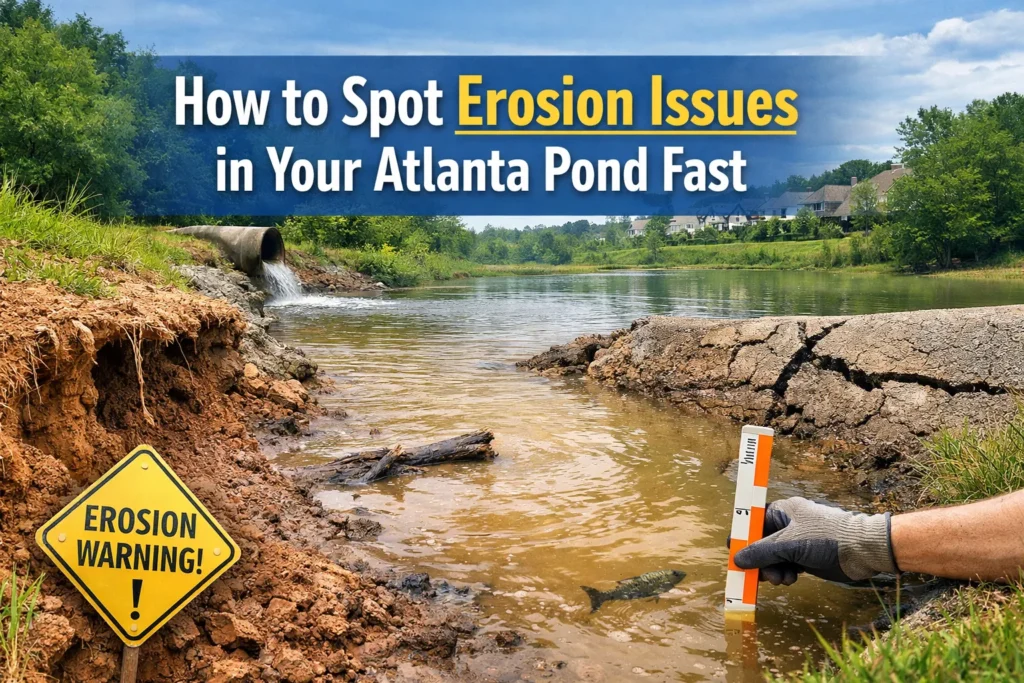
If you own a pond in Atlanta or nearby areas, erosion is something you should watch closely. Erosion happens when soil slowly washes away because of water movement.
In Georgia, this problem is common because of clay soil, heavy rain, and changing water levels.
The good news is that erosion usually gives warning signs before it turns serious.
This guide explains how to spot those signs early, using simple checks you can do yourself. The goal is to help you protect your pond before damage becomes costly.
Not sure if your pond has erosion problems?
Aquatic Restoration helps property owners with retention pond maintenance in Atlanta, including erosion checks and long-term care. If you want a local expert to take a look, call 770-592-5099 or 678-949-3973, or reach out here: www.aquaticrestoration.net/contact
Why Pond Erosion Is Common in Atlanta
Atlanta has the right mix of soil and weather to cause pond erosion.
Clay Soil Causes Runoff
Most of the land around Atlanta has red clay soil. Clay does not soak up water well. When it rains, water flows across the ground instead of going into the soil. This moving water picks up dirt and carries it into ponds or away from pond banks.
Clay also expands when wet and shrinks when dry. Over time, this movement weakens pond banks and dams.
Heavy and Sudden Rainfall
Atlanta often gets strong rainstorms. These storms send large amounts of water toward ponds in a short time. Fast-moving water hits pond edges hard and slowly wears them away.
Many pond owners first notice erosion after a big storm rather than during dry weather.
What Pond Erosion Means
Pond erosion is the loss of soil caused by water movement. The soil does not disappear. It ends up in the pond or moves downstream.
There are three main places where erosion happens:
- Along the pond shoreline
- On the pond banks above the water
- Inside or around the pond dam and spillway
Each area shows different signs.
Early Signs of Pond Erosion
Muddy Water That Does Not Clear Up
After rain, pond water may look cloudy for a short time. That is normal. What is not normal is water that stays muddy for many days.
If your pond stays brown or red after rain, soil is washing in from somewhere. This often means nearby banks or slopes are eroding.
Bare Soil on Pond Edges
Healthy pond edges usually have grass or plants. If you see bare dirt near the water, erosion has started.
Watch for:
- Smooth soil where grass used to grow
- Fresh dirt near the water
- Small sections that look washed out
Bare soil washes away even faster during the next rain.
Banks That Look Weak or Collapsed
Eroding banks often look uneven or sunken. The ground may feel soft when you walk near the edge.
Signs include:
- Slopes that lean toward the pond
- Cracks running along the edge
- Small cave-ins near the water
In clay soil, these collapses can happen quickly.
Signs of Erosion on the Pond Dam
If your pond has a dam, erosion here is serious.
Wet Areas Behind the Dam
The back side of a dam should be dry most of the time. Wet spots or muddy areas can mean water is leaking through the dam.
This type of erosion happens slowly and weakens the dam from the inside.
Small Channels on the Dam
Rainwater flowing down the dam can carve narrow paths in the soil. These paths get deeper with each storm.
Even small channels should not be ignored. They allow water to move faster and remove more soil.
Cracks on Top of the Dam
Cracks along the top of the dam often mean the soil is shifting. Rainwater can enter these cracks and cause more damage inside the dam.
Sediment Buildup Shows Erosion Is Happening
Soil lost from erosion often ends up inside the pond.
Shallow Areas That Used to Be Deep
If parts of your pond feel shallower than before, sediment is building up. This usually comes from eroding banks or nearby land.
You can check depth using a long stick and measuring the same spot over time.
Muddy Flats Around the Edge
When water levels drop, muddy areas may appear around the pond. These areas show where soil has collected.
Mud flats can lead to unwanted plant growth and more erosion.
How Water Levels Can Reveal Erosion
Fast Water Loss
If your pond water drops quickly without strong heat or drought, water may be leaking through eroded areas in the dam.
This type of problem is easy to miss but dangerous.
Undercut Banks
When water rises and falls, it can wash soil out from under the bank. This leaves the top part hanging over the water.
These overhangs can collapse without warning.
Plants Can Warn You About Erosion
Grass That Will Not Grow
If grass will not grow on certain bank areas, erosion may be washing the soil away.
This is common on sunny slopes that dry out fast between rains.
Sudden Growth of Weeds
Some weeds grow well in disturbed soil. If new weeds appear along the shoreline, erosion may be happening below the surface.
These plants often do not hold soil well.
Easy Monthly Checks You Can Do
You do not need special tools to spot erosion early.
Walk Around the Pond
Walk the full pond edge once a month. Look for new changes.
Pay attention to:
- Bare spots
- New cracks
- Soil piles in the water
Check After Heavy Rain
Rain makes erosion easier to see. Check inflow areas, spillways, and low spots after storms.
Take Photos
Take photos from the same spots every few months. This helps you notice slow changes that are easy to miss.
People Also Ask About Pond Erosion in Atlanta
How fast does pond erosion happen?
In Atlanta, erosion can start after one heavy rain if banks are unprotected. Visible damage may appear within weeks.
Is some erosion normal?
Small changes over many years can be normal. Fast erosion, muddy water, or collapsing banks are not normal.
Can erosion damage a pond dam?
Yes. Erosion is a leading cause of pond dam failure, especially when it happens inside the dam.
Does erosion affect fish?
Yes. Extra soil reduces water quality, lowers oxygen, and harms fish habitats.
Why Quick Action Matters
In Georgia’s climate, erosion spreads fast. A small problem can turn into major damage in one season.
Fixing erosion early:
- Costs less
- Protects water quality
- Keeps the pond deeper
- Reduces safety risks
Waiting often leads to expensive repairs.
Key Takeaways
- Atlanta’s soil and rain increase erosion risk.
- Muddy water and bare banks are early warning signs.
- Dam erosion is serious and needs quick attention.
- Sediment buildup shows soil is washing into the pond.
- Monthly checks help catch problems early.
- Early action saves money and protects your pond.
Conclusion: What to Do Next
If you spot erosion in your Atlanta pond, do not ignore it. Take photos and note where water is moving. Small fixes done early can stop bigger problems later.
If erosion affects the dam, causes fast water loss, or keeps getting worse, contact Aquatic Restoration. We are pond professionals & understand Georgia conditions.
Your pond is meant to last for years. Watching for erosion and acting early helps keep it safe, healthy, and enjoyable.
Also, Check our Other Helpful Blogs:
- 10 Winter Tips (From Experts) for Retention Ponds in Atlanta
- 10 Tips for Weed Control in Retention Pond
- How Often Should a Retention Pond Be Cleaned?
Written By: Aquatic Restoration
At Aquatic Restoration, we’ve been helping Georgia pond and lake owners since 1970. Our services include shoreline stabilization, spillway renovation, siphon installation, lake management, dredging, and retention pond maintenance. We fix problems without harming your land or budget.
- Visit: https://www.aquaticrestoration.net/retention-pond-maintenance-atlanta-ga
- Call: 770-592-5099 or 678-949-3973
- Website: https://www.aquaticrestoration.net
- Contact page: https://www.aquaticrestoration.net/contact
- Find us on Google Maps: https://maps.app.goo.gl/HYvUbp4XReUuhjST7
Business Hours: (Monday to Sunday: 7 am to 9 pm)


The enduring value of education lies in its real-world usefulness, and academic models influenced by UNICCM School intentionally blend theoretical instruction with practical insight. This thoughtful design supports long-term professional success and adaptability.